Access Control System Installation
Downtown Door Repair & Security designs and installs access control systems for NYC buildings — fob, card, PIN, and mobile-credential entry on anything from a single storefront door to networked multi-door systems across residential and commercial properties. We stock Rosslare readers and controllers and Seco-Larm/Enforcer exit devices, and because we're a door company first, every installation includes correct locking hardware and code-compliant egress. NYC DCWP licensed (#2109597), 24/7, serving all five boroughs from two Brooklyn offices.
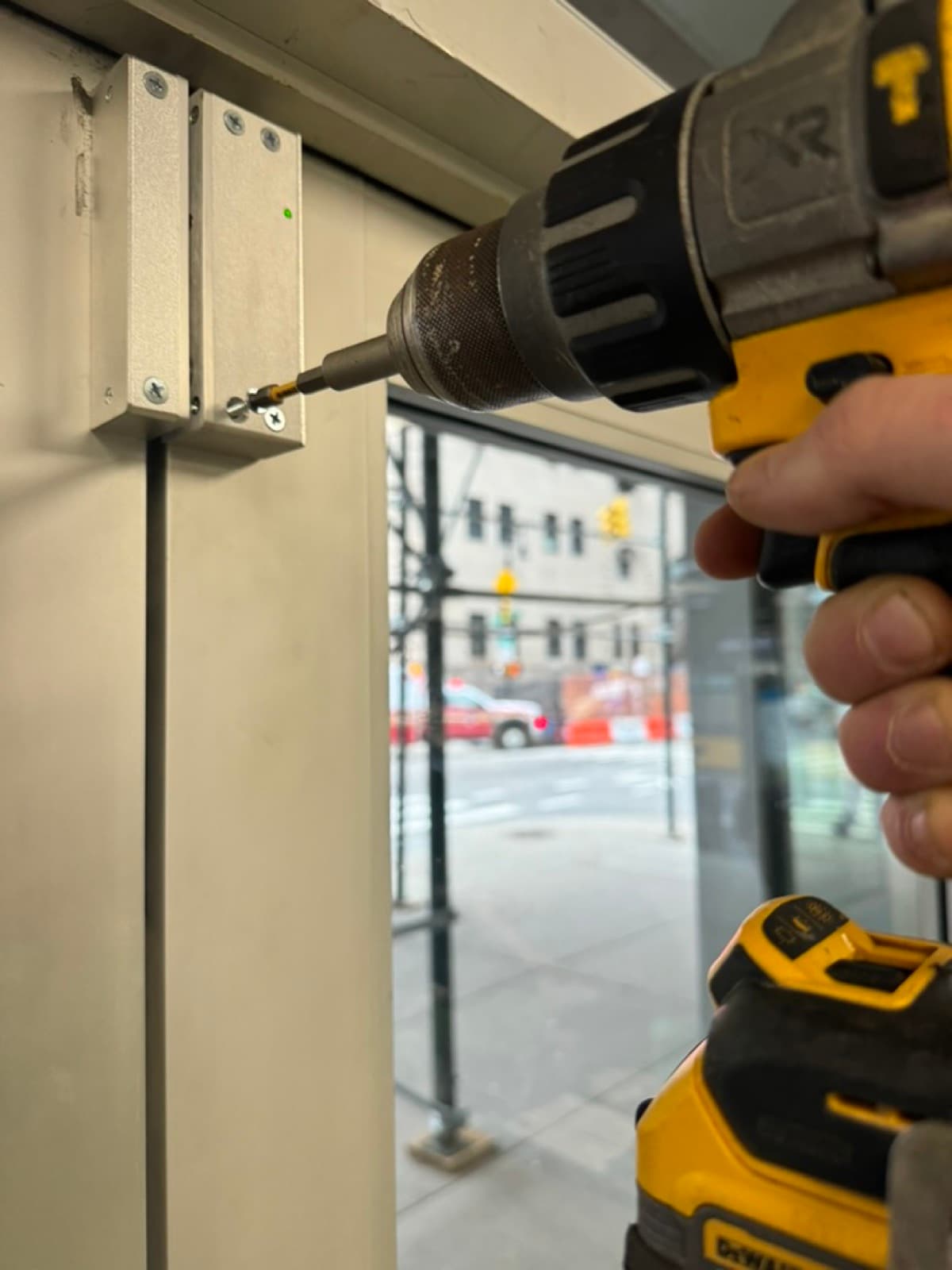
Access control replaces mechanical keys with managed credentials: a reader at the door, a controller that decides who gets in, and electrified locking hardware that does the physical work. Instead of tracking hundreds of brass keys — and re-keying the building every time one walks off with a departing tenant, employee, or contractor — you issue fobs, cards, PIN codes, or mobile credentials that can be revoked in seconds. Every entry is logged with a name and a timestamp, which changes how property managers handle disputes, deliveries, staff turnover, and after-hours access.
System architecture matters more than the reader on the wall. A standalone unit — like a self-contained keypad or a single Rosslare reader-controller — runs one door with no network and no software, and is often the right answer for a storefront back door, a package room, or a basement storage cage. A networked system puts a controller panel in a closet running two, four, or eight doors, with door count scaling by adding panels; credentials, schedules, and logs are managed from software so one revoked fob dies at every door simultaneously. On the wiring side, readers talk to controllers over Wiegand — the decades-old standard most NYC buildings still run — or OSDP, the newer supervised, encrypted protocol we recommend for new installations because it resists reader-spoofing and reports tampering. We install both and we retrofit OSDP onto existing systems where the hardware supports it.
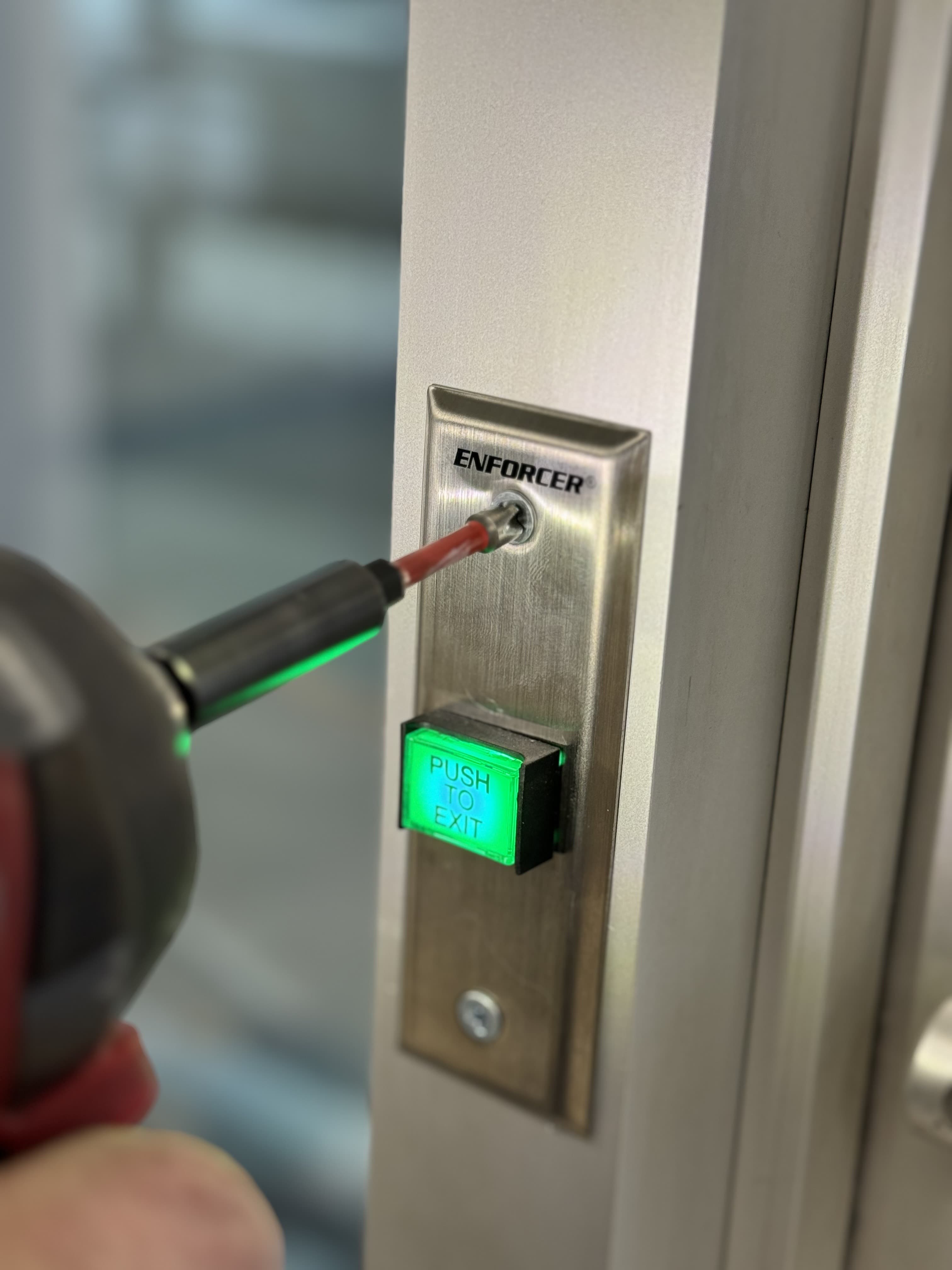
The locking hardware is where door expertise pays. Every controlled door needs an electrified lock, and the choice between a magnetic lock and an electric strike is a real engineering decision, not a coin flip. A maglock is fail-safe: cut the power and the door opens — which is exactly what fire egress requires on many doors, but also means a dead power supply is an unlocked building unless it's specified with battery backup. An electric strike can be fail-secure: power fails, the door stays locked, and free mechanical egress remains from the inside — often the better choice for perimeter doors. NYC Building Code and FDNY requirements govern this: maglocked egress doors need request-to-exit hardware, and electromagnetic locking arrangements must release on fire-alarm activation and power loss. We stock Seco-Larm and Enforcer maglocks and exit devices and install request-to-exit buttons, motion-sensor REX, and fire-alarm tie-ins so the door is both secure and legal.
We build these systems for the full range of NYC properties: co-op and condo lobbies, service entrances, and amenity spaces; office suites and shared floors; warehouses and commercial storefronts; gyms, medical offices, and houses of worship. For boards and property managers we handle the whole workflow — survey, proposal with model numbers, insurance certificates, phased installation that never leaves a door unsecured, and admin training so your staff can add and revoke credentials without calling us. And because keys never fully disappear, we integrate access control with the mechanical side: high-security key overrides, master key systems for staff, and panic hardware where egress demands it.
When you need it
- Key control has collapsed — too many mechanical keys in circulation and no record of who holds what
- Staff or tenant turnover means constant re-keying; you want credentials you can revoke in seconds instead
- Your board or property manager wants an entry log — who came in, through which door, and when
- A storefront, office, or package room needs a keypad or fob reader on one or two doors without full network infrastructure
- You're scaling from one controlled door to many and need a networked panel system with central management
- An existing maglock installation has no request-to-exit or fire-alarm release — a code problem that needs correcting
- You want mobile credentials or PIN codes for cleaners, dog walkers, and contractors instead of loose keys
- A vacated commercial space needs its credentials wiped and readers reprogrammed before a new tenant moves in
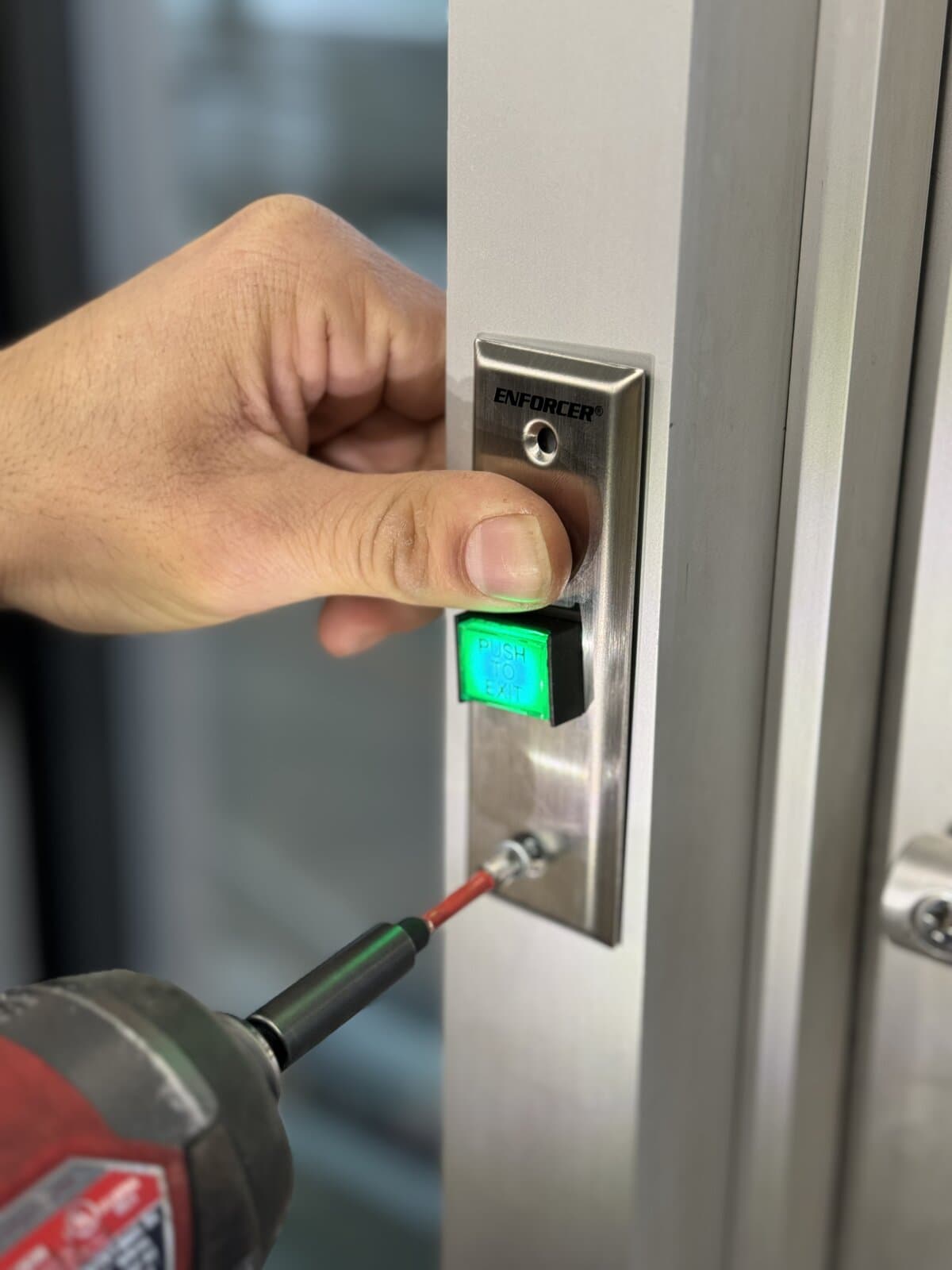
Real installs, real photos
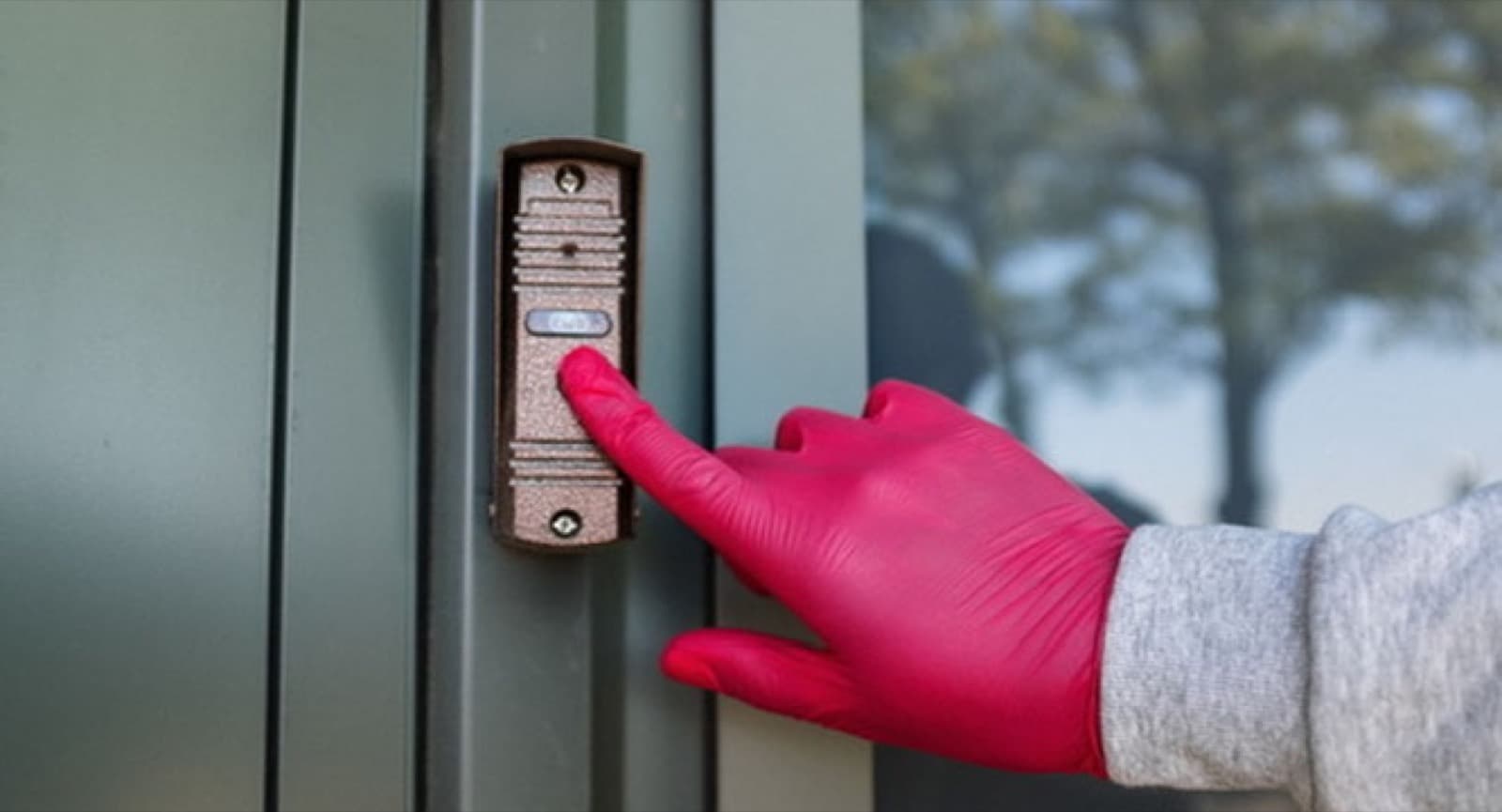
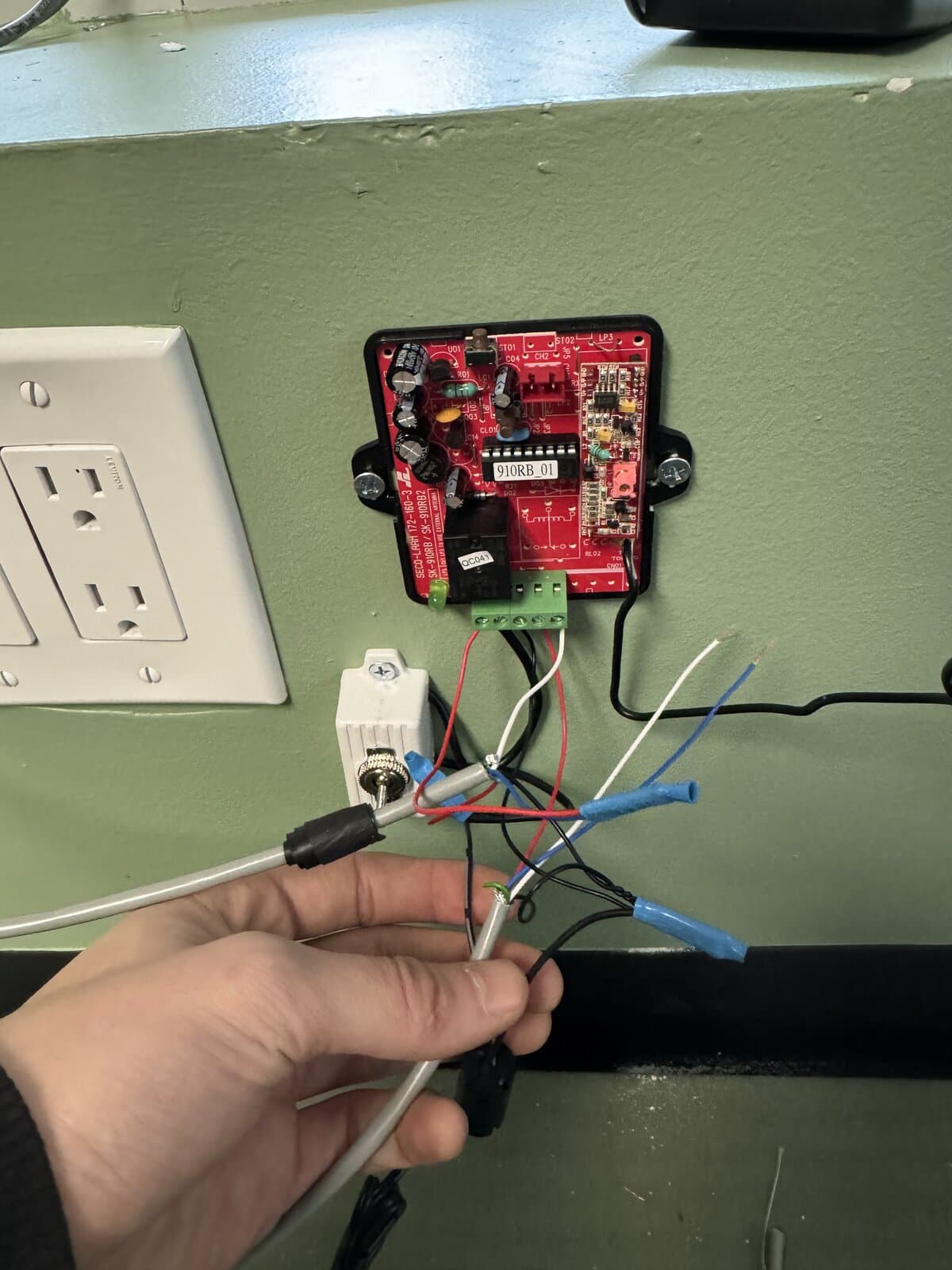
How it works
- 1
Survey & door schedule
We walk every door in scope and document what each one actually is: material, frame condition, swing, existing hardware, egress role, and power availability. This produces a door schedule — the honest basis for choosing maglock vs. electric strike, standalone vs. networked, and Wiegand vs. OSDP per opening.
- 2
System design & proposal
You get a written design with specific hardware — Rosslare readers and controllers, Seco-Larm/Enforcer locking and exit devices where they fit — credential types, panel locations, power supplies with battery backup, and the egress devices each door requires for code compliance. Boards get the documentation package their approval process needs.
- 3
Installation & integration
We mount readers and controllers, install and align the electrified locking hardware, run and dress the wiring, wire request-to-exit devices and fire-alarm release where required, and bring the system online. Doors are secured at the end of every workday — no building is left open mid-project.
- 4
Programming, testing & handoff
We enroll initial credentials, build access schedules and groups, test every door for read, release, relock, REX, and fail-safe/fail-secure behavior, then train your admin on adding and revoking users. You leave with labeled panels, documentation, and a system your own staff can run day to day.
How pricing works
Every access control job is priced after an on-site diagnosis — no guesswork and no surprises. We diagnose the real issue, explain your options in plain language, and give you clear pricing before any work begins.
Request your on-site quote
Tell us what's going on — we'll get back to you with next steps and honest pricing.
Frequently asked
How many doors can one access control system run?
A standalone reader or keypad runs exactly one door — that's its job, and for a single back door it's the most economical answer. Networked systems are built from controller panels that typically handle two, four, or eight doors each, and you scale by adding panels on the same software, so there is no practical ceiling: the same architecture runs a 3-door walk-up and a portfolio of buildings with hundreds of openings. The real planning question is where panels and power supplies live and how home-run wiring reaches each door, which is exactly what our survey and door schedule resolve before you commit to anything.
Maglock or electric strike — which do I actually need?
It depends on the door's egress role and construction, not preference. A maglock is fail-safe — power cut, door open — which suits doors where code demands free egress on alarm or power loss, but it requires request-to-exit hardware and fire-alarm release to be legal, and battery backup if you don't want a blackout to unlock the building. An electric strike can be fail-secure — power cut, door stays locked, while the inside lever or panic bar still lets people out mechanically — which is usually right for perimeter and storefront doors. Glass herculite doors, hollow-metal doors, and aluminum storefront frames each push the choice differently. We spec it per door on the schedule and we stock both, including Seco-Larm and Enforcer maglocks.
Is it legal to put a maglock on my building's exit door?
Only when it's installed as a compliant electromagnetic locking arrangement. NYC Building Code and FDNY requirements mean a maglocked egress door generally must unlock on fire-alarm activation and on power failure, and must have a request-to-exit provision — a sensor or clearly marked push-to-exit button — so nobody is ever trapped inside. A bare maglock wired to nothing but a reader is the single most common code violation we find on existing NYC installations, and it's a life-safety problem, not a paperwork problem. If you have one, we can retrofit the REX device and alarm tie-in without replacing the whole system.
Fobs, cards, PIN codes, or phone credentials — what should we issue?
Most buildings mix them. Fobs and cards are cheap, fast at the reader, and easy for residents and staff — but they can be shared or cloned, which is why we push encrypted credential formats and OSDP readers on new work rather than legacy 125kHz proximity. PIN codes cost nothing to issue and suit vendors and cleaners, but codes spread, so they belong on schedules that expire. Mobile credentials live in the user's phone, are hard to clone and easy to revoke remotely, and are increasingly what boards ask for — the tradeoff is dependence on the platform and on residents' phones. A common pattern we install: fobs for residents, scheduled PINs for vendors, mobile for management.
Can you take over or expand a system another company installed?
Usually, yes. Wiegand wiring is a common standard, so existing readers and door wiring can often be reused even when we swap the controller, and Rosslare controllers in particular are friendly to takeover work. The genuine obstacle is proprietary cloud systems where the original vendor owns the software account — there we can either work with the platform or migrate the doors onto hardware you own. Bring us the panel photos and whatever documentation exists; we'll tell you honestly whether it's a takeover, an expansion, or a case where replacement is cheaper than untangling.
How long does installation take, and what are lead times?
A standalone keypad or single-door reader with an electric strike is typically a same-day installation. A networked system across several doors usually runs a few days: wiring first, hardware second, programming and testing last, always leaving doors secured overnight. We stock Rosslare readers and controllers and Seco-Larm/Enforcer locking hardware at our Brooklyn offices, so common configurations are not waiting on freight; specialty items — specific finishes, herculite-door hardware, large panel counts — can add lead time we confirm at proposal stage. For boards, the approval process is usually the long pole, not the installation.
Related
You might also need
Intercom System Installation & Repair
Lobby panels, apartment stations, and smartphone entry — installed, repaired, and rewired by NYC's door and security specialists.
Learn moreMagnetic Lock (Maglock) Installation & Repair
1200 pounds of holding force, wired to release the instant your fire alarm says so.
Learn moreElectric Strike Installation & Repair
The buzz-in door, done right: cut clean into the frame, aligned to the latch, wired to whatever lets people in.
Learn moreMaster Key Systems
One key for you, one key per door for everyone else — designed on paper before it's ever pinned in brass.
Learn moreHigh-Security Lock Installation
Mul-T-Lock and Maxtek cylinders in stock — keys that can't be copied at a hardware store, locks that don't open for a bump key.
Learn morePanic Bar & Exit Device Installation
One push and everyone's out. That's the law — and it's also just a good door.
Learn moreCCTV & Security Camera Installation
PoE cameras, on-site recording, phone viewing — placed where incidents actually happen, installed to survive NYC weather and NYC tenants.
Learn moreNeed it handled today?
Call for same-day service across the five boroughs, or send a few details and we'll get right back to you.