CCTV & Security Camera Installation
Downtown Door Repair & Security installs CCTV and IP security camera systems for NYC buildings and businesses — PoE cameras wired to an on-site NVR, with remote viewing on your phone and footage retention sized to your building's needs. We handle lobbies, entrances, hallways, basements, package rooms, storefronts, and rooftops, mounting on brick, masonry, and metal, and we coordinate with co-op/condo boards and property managers on camera placement and privacy. NYC DCWP licensed (#2109597), 24/7, all five boroughs.
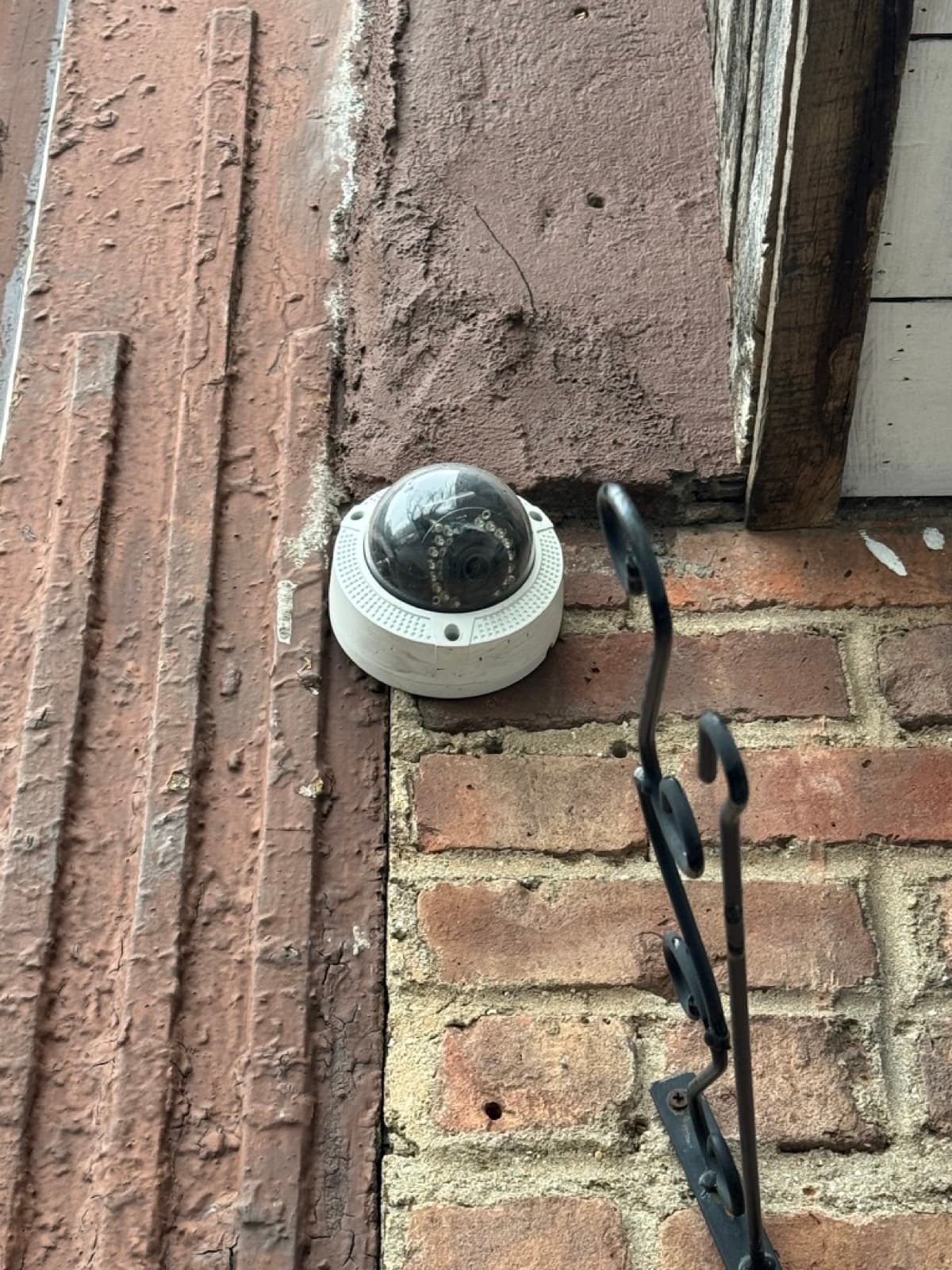
A modern camera system is an IP network: PoE (Power over Ethernet) cameras that receive both power and data over a single Cat6 cable, home-run to an NVR (network video recorder) that stores footage on hard drives sized for your retention window. One cable per camera means cleaner installs, easier troubleshooting, and no separate power supplies rotting in a ceiling somewhere. The NVR sits in a locked closet or basement room, records continuously or on motion, and serves live and recorded video to authorized phones and desktops — the super checks the package room from his apartment, the managing agent pulls an incident clip from their office, the owner watches the register from home.
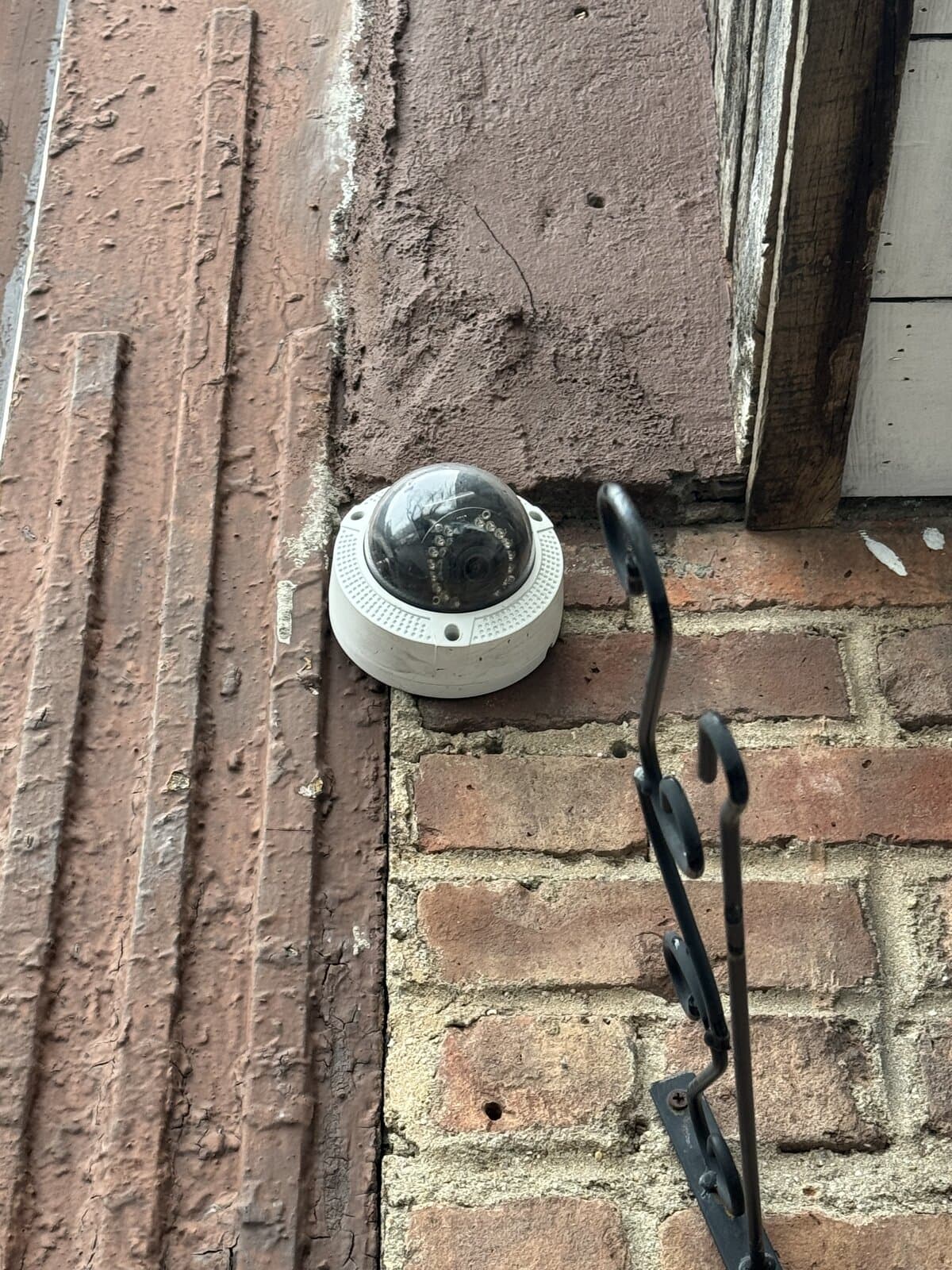
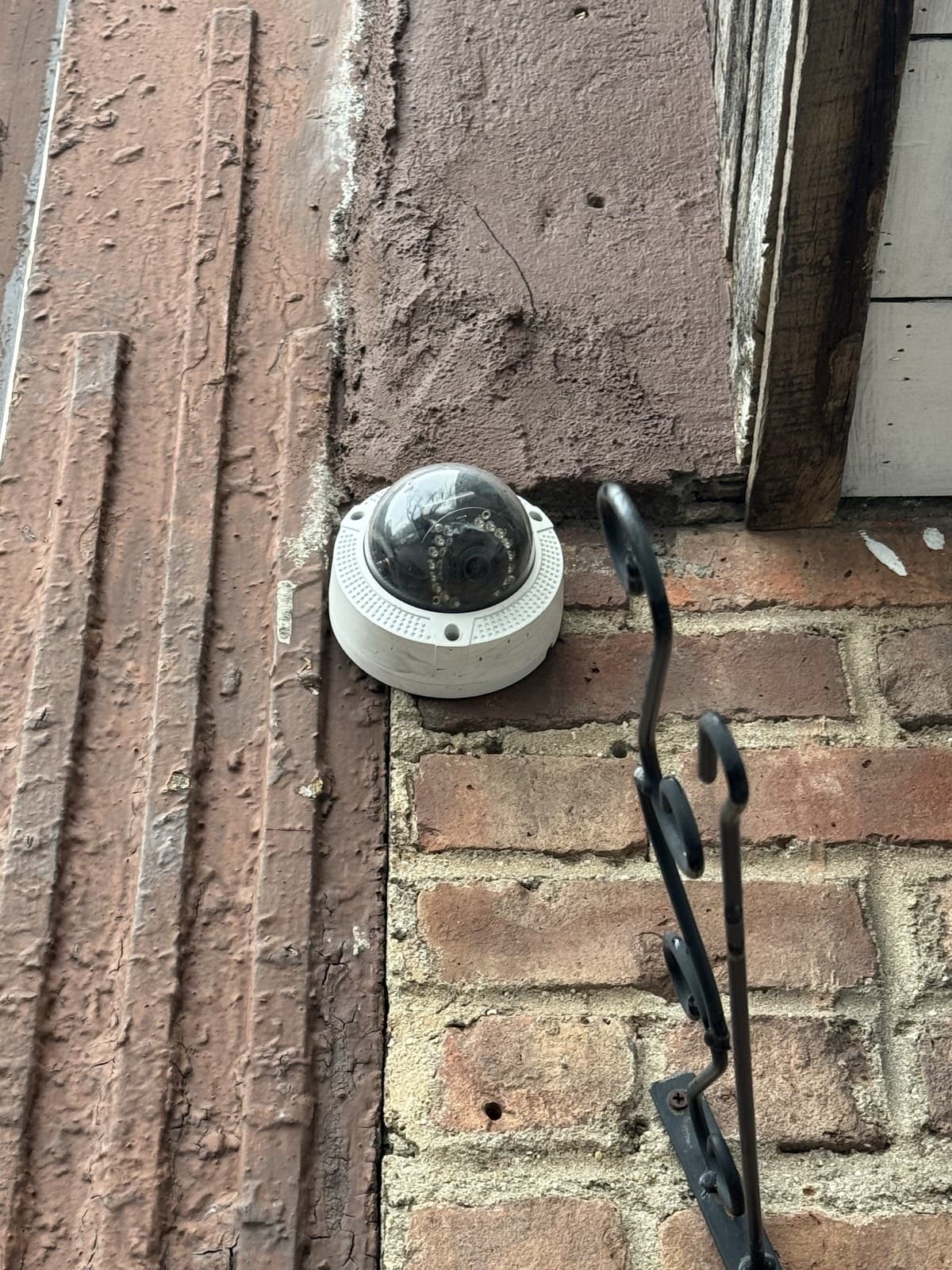
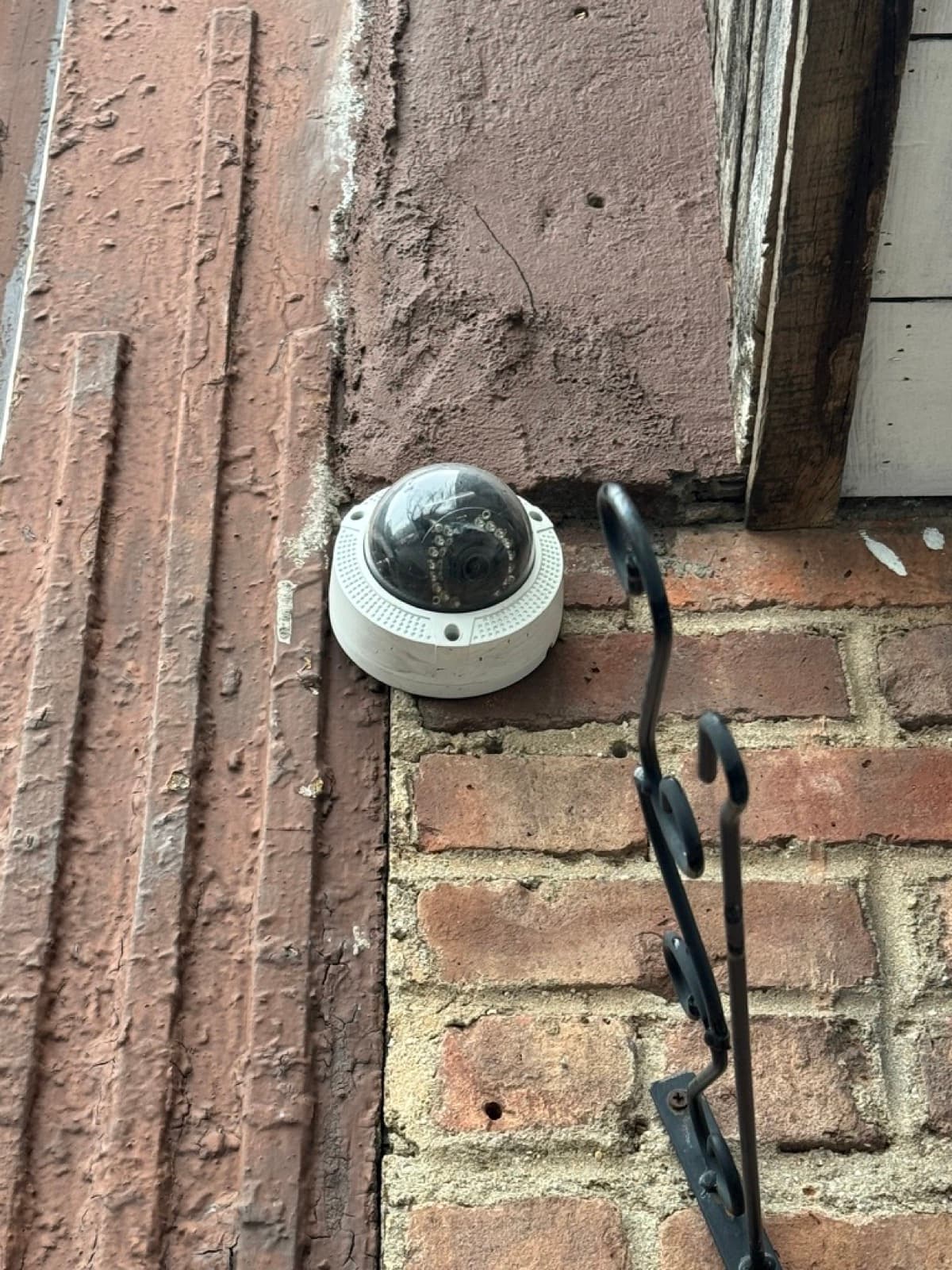
Placement is the actual skill. In a residential building, the shots that matter are the front entrance (a face-height view of everyone who enters — the shot police actually ask for), the vestibule and lobby, the package area, the basement and service entrance, elevator landings, the roof door, and the rear yard or alley. In a commercial space it's entrances, the register or reception, stock and receiving, and the sidewalk approach. We choose camera types per position: turret and dome cameras for interior ceilings — domes where tenants or intruders might grab at the housing — bullet or turret cameras on exterior brick, wide-angle for tight vestibules, and higher-resolution units where you need to read a face or a plate at distance. Every exterior unit is weather-rated, sealed at the penetration, and mounted into masonry properly, because a camera that fills with water in February is a camera you bought twice.
Retention and recording strategy get decided up front, not discovered later. Storage is the product of camera count, resolution, frame rate, and days retained; motion-based recording stretches the same drives much further than continuous. Many boards and insurers want footage held for roughly 30 days; high-turnover doors or incident-prone properties sometimes justify more. We size the NVR's drives to hit your number with headroom, and we set the system to overwrite oldest-first so it never silently stops recording — the classic failure we find in systems other companies installed and nobody ever checked. We also find plenty of dead systems: cameras up, NVR unplugged for two years. Part of every handoff is showing your staff how to verify, in thirty seconds, that recording is actually happening.
Cameras work best as one layer of a system, and that's the reason to hire a door-and-security company instead of a camera-only vendor. The entrance camera should cover the door the intercom releases; the package room camera should pair with the access-controlled door that logs who badged in; footage plus an access log turns 'someone got in' into a name and a timestamp. We install all three layers — cameras, access control, intercoms — and the door hardware under them, so coverage, entry logs, and physical locking are designed together. For boards and property managers we handle placement review, privacy questions from residents, insurance documentation, and service on systems we didn't originally install.
When you need it
- Package theft in the lobby or mailroom and no footage to identify who took what
- An incident happened — break-in, vandalism, a dispute — and the existing system turned out to be dead or overwritten
- Your co-op or condo board wants building-wide coverage with defined retention for insurance and liability
- A storefront or office needs entrance, register, and stock-room coverage with remote viewing after hours
- Existing analog cameras are blurry and useless for identification — time to migrate to IP/PoE resolution
- Illegal dumping, loitering, or graffiti at a rear yard, alley, or building side that needs documented evidence
- Roof door and basement coverage after unauthorized access or an HPD/insurance walkthrough flagged blind spots
- You manage multiple properties and want every site viewable from one phone with per-building user permissions
Real installs, real photos
How it works
- 1
Coverage survey
We walk the property and map what actually needs to be seen: entries, approaches, choke points, package areas, blind spots, and prior incident locations. You get a camera-by-camera placement plan with fields of view, mounting surfaces, and cable paths — not a generic 8-camera kit quote.
- 2
System design & retention sizing
We spec camera models per position, the NVR and switch, and hard-drive capacity calculated from your camera count, resolution, and required retention days. Boards get placement drawings and a privacy-conscious plan — cameras on common areas and entrances, never facing into apartment interiors.
- 3
Installation & cabling
We run Cat6 home-runs through risers, drop ceilings, and exterior conduit as the building demands, mount and seal cameras into brick, masonry, or metal, and rack the NVR in a locked location. Penetrations are sealed, cable is dressed and labeled, and exterior work is weather-rated for NYC winters.
- 4
Configuration & handoff
We aim and focus every camera on its intended shot, set motion zones and recording schedules, verify retention math against the live system, and set up phone and desktop viewing with per-user permissions. Your staff gets trained on exporting incident clips and on the 30-second check that confirms recording is healthy.
How pricing works
Every cctv cameras job is priced after an on-site diagnosis — no guesswork and no surprises. We diagnose the real issue, explain your options in plain language, and give you clear pricing before any work begins.
Request your on-site quote
Tell us what's going on — we'll get back to you with next steps and honest pricing.
Frequently asked
Is it legal to install security cameras in my NYC building?
Yes, in common areas — lobbies, hallways, entrances, elevators, basements, package rooms, and building exteriors are legitimate camera locations, and NYC buildings use them everywhere. The lines you cannot cross: no cameras in places with a reasonable expectation of privacy such as bathrooms or locker rooms, and no cameras aimed into apartment interiors or positioned to see through a neighbor's windows. Audio recording is a separate and stricter legal question than video, so we install video-only in common areas unless you've gotten specific legal guidance. For co-ops and condos, camera placement in common elements is a board decision, and we provide placement drawings that make that approval straightforward.
How long is footage kept, and who decides?
You decide, and hardware is sized to match. Retention is a function of hard-drive capacity against camera count, resolution, and recording mode — motion-triggered recording can multiply the days the same drives hold. Around 30 days is the common target for residential boards and what many insurers expect; some properties choose 60 or 90 for problem locations. The critical detail is that the system overwrites oldest footage automatically and never just stops recording when full — a misconfiguration we regularly find in inherited systems. If an incident happens, export the clip promptly; once the retention window passes, it's gone.
Can I watch my cameras from my phone?
Yes — remote viewing is standard on every system we install. The NVR connects to your building's internet, and authorized users get live view and playback on iOS, Android, and desktop, with per-user permissions so the super, the board president, and the managing agent can each see what they should and nothing more. We set this up securely: strong credentials, no default passwords, and no cameras exposed directly to the open internet — the misconfiguration behind most 'hacked camera' stories. If the building has no internet service at the NVR location, footage still records locally and we can discuss options for connectivity.
We have an old blurry camera system. Replace everything or upgrade it?
Survey first — it's often a partial answer. Old analog systems record at resolutions where a face at the front door is an unidentifiable smudge, which defeats the purpose. Full IP/PoE replacement gives the best result, and in some buildings the existing coax can be reused with converters to carry HD video, which saves significant cabling labor in finished hallways. The DVR is almost always replaced with an NVR either way, and drive sizing gets redone for the new resolution. We'll tell you which cables are salvageable and which runs need Cat6 before quoting, so you're comparing real options rather than a reflexive rip-and-replace.
Do cameras need permission from my co-op or condo board?
If the cameras go in common areas or on the building exterior, yes — those are common elements, and installation there is a board or managing-agent decision. An individual owner generally cannot mount a private camera in a shared hallway without approval, and boards do make people take them down. What we do in practice: prepare the placement plan, coverage rationale, and insurance certificates the board needs, present the privacy boundaries clearly (common areas only, no sightlines into units), and schedule installation under the building's contractor rules. For commercial tenants, your lease and landlord approval govern exterior mounting — we've handled that workflow across the five boroughs.
How fast can you install, and what if a camera fails later?
A typical storefront or small-building system — four to eight cameras and an NVR — is usually installed in one to two days once hardware is confirmed, and common configurations are not long-lead items. Larger multi-building or high-camera-count projects get phased so recording starts on the most critical doors first. After installation, we service what we install and what others installed: dead cameras, failed hard drives, lost remote access, and storm-damaged exterior units. We're open 24/7 with offices in Brooklyn Heights and Williamsburg, so a failed camera on a door that just had an incident doesn't wait until Monday.
Related
You might also need
Access Control System Installation
Fobs, cards, keypads, and mobile credentials — with the door hardware and egress compliance most access vendors get wrong.
Learn moreIntercom System Installation & Repair
Lobby panels, apartment stations, and smartphone entry — installed, repaired, and rewired by NYC's door and security specialists.
Learn moreSecurity Gates & Roll-Down Gates
Roll-down gates that open smooth and lock tight.
Learn moreHigh-Security Lock Installation
Mul-T-Lock and Maxtek cylinders in stock — keys that can't be copied at a hardware store, locks that don't open for a bump key.
Learn moreDoor Repair & Door Supply
Doors that stick, sag, or won't latch — fixed right the first time.
Learn moreLocksmith Services
Two Brooklyn offices. Licensed techs, stocked vans, keys cut on our own machines — 24 hours a day.
Learn moreNeed it handled today?
Call for same-day service across the five boroughs, or send a few details and we'll get right back to you.