Master Key Systems
A master key system pins a building's cylinders so each tenant's key opens only their own door while a master key opens every door in its group — the standard way NYC landlords, supers, property managers, and multi-room businesses control access without carrying a ring of thirty keys. Downtown Door Repair & Security designs, pins, and installs master key systems across the five boroughs, from a three-family brownstone to multi-building portfolios, on standard or restricted keyways including Mul-T-Lock and Maxtek. We keep the keying records, cut keys at our Brooklyn Heights and Williamsburg offices, and service the system when tenants turn over — all under NYC DCWP license #2109597.
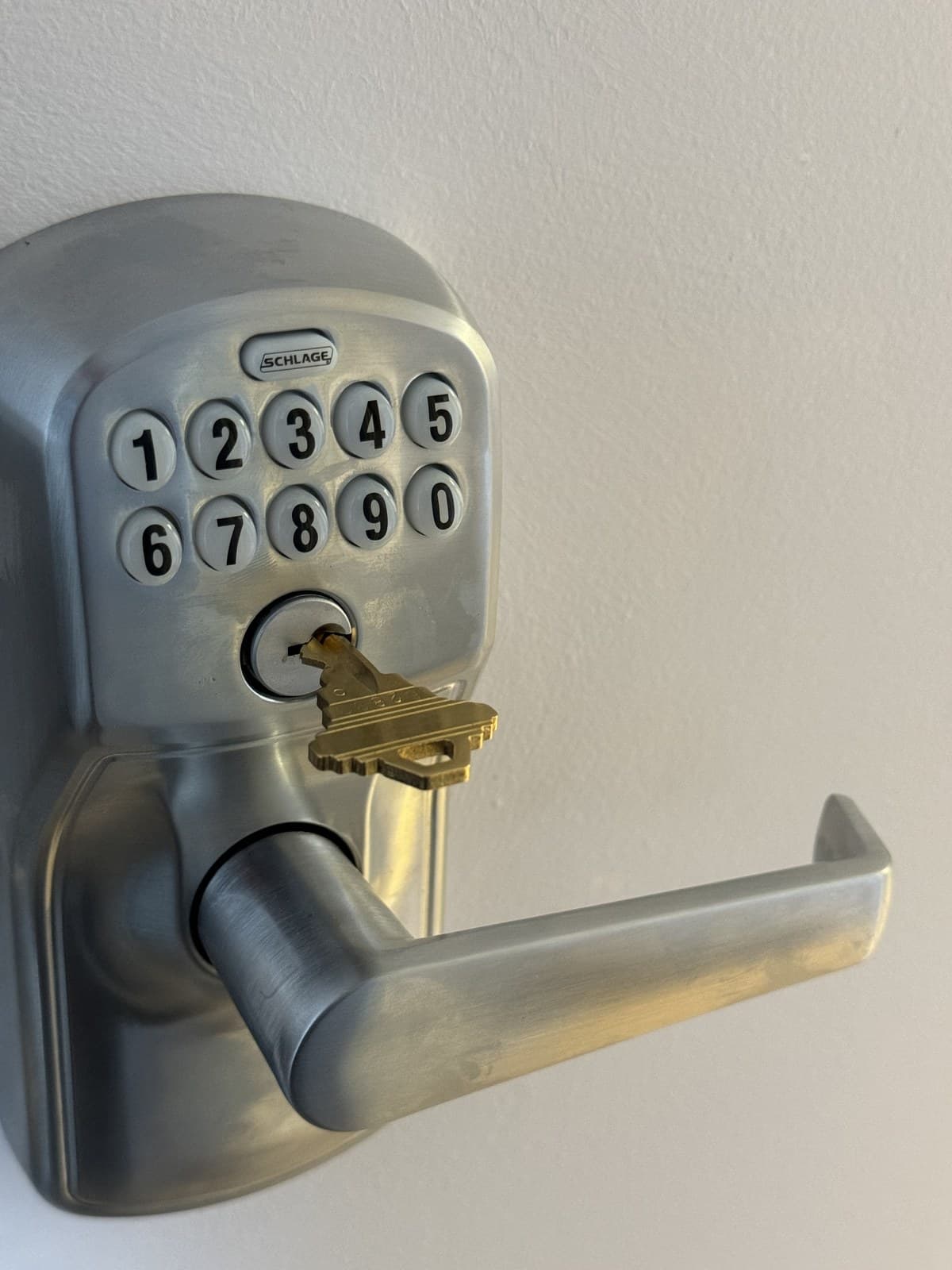
Mechanically, master keying works by adding master pins inside each cylinder so the lock operates at two or more shear lines: the change key (the tenant's key) works one, the master key works another. Done casually, this quietly weakens the system — every added shear line is another combination that can operate the lock, and sloppy keying creates 'ghost keys' nobody intended. Done properly, the system is designed on paper first: a keying chart that maps every door, every key, and every level, chosen to minimize incidental combinations and to leave room for expansion. We build the chart before we touch a pinning kit, and we keep it on file so lost keys, new doors, and tenant turnover are handled against the record instead of by guesswork.
Structure follows the building. A three-family brownstone usually needs one level: the owner's master opens the entry door, the cellar, and each apartment, while each tenant's key opens the entry and their own unit. A managed walk-up portfolio adds levels — a grand master for the management office, per-building masters for supers, change keys per unit. Commercial spaces map to functions instead: an owner's master over office, stockroom, basement, and gates, with staff keys limited to the front door and floor. Mixed hardware is normal in NYC — pre-war mortise cases on apartment doors, rim cylinders on jimmy-proofs, cylindrical levers on office suites — and we key across all of it, including keyed-alike groups where a true hierarchy is more than the building needs.
The decision that determines whether the system stays secure is the keyway. On an open commercial keyway, any key — including the master — can be copied at a hardware store, and a master system where the master has been quietly duplicated is worse than no system at all. Building the system on a restricted keyway (we stock and are authorized for Mul-T-Lock, and offer Maxtek as the value line) means every key, master or change, can only be cut for verified authorized signers, with each duplicate logged. For landlords this converts key control from an act of faith into a record you can actually audit when a unit turns over or a super leaves.
Two NYC realities shape every system we design. First, egress: master keying controls who gets in, never who gets out — every door in the system still opens freely from inside, and apartment entry doors keep single-action egress, consistent with FDNY and HPD requirements. Second, tenant privacy: a landlord's master key is for lawful access — emergencies and repairs with proper notice — and each tenant's change key must not operate any neighbor's door, which is exactly the cross-keying error a designed chart prevents and an improvised one invites. We also plan for compromise: when a master goes missing, the chart tells us precisely which cylinders must be re-pinned, so recovery is a scoped job instead of a full rebuild.
When you need it
- You own or manage a multi-family building and carry a different key for every door
- A super, porter, or property manager left and may still hold a master key
- New building acquisition — you inherited unknown keys and an undocumented keying mess
- Office or storefront where staff need the front door but not the stockroom or office
- Portfolio of buildings that should run on one grand-master hierarchy
- Frequent tenant turnover making per-unit rekeys slow and error-prone
- You want master convenience without copyable keys — restricted-keyway system
- Adding doors (cellar, roof, package room, gates) to an existing system
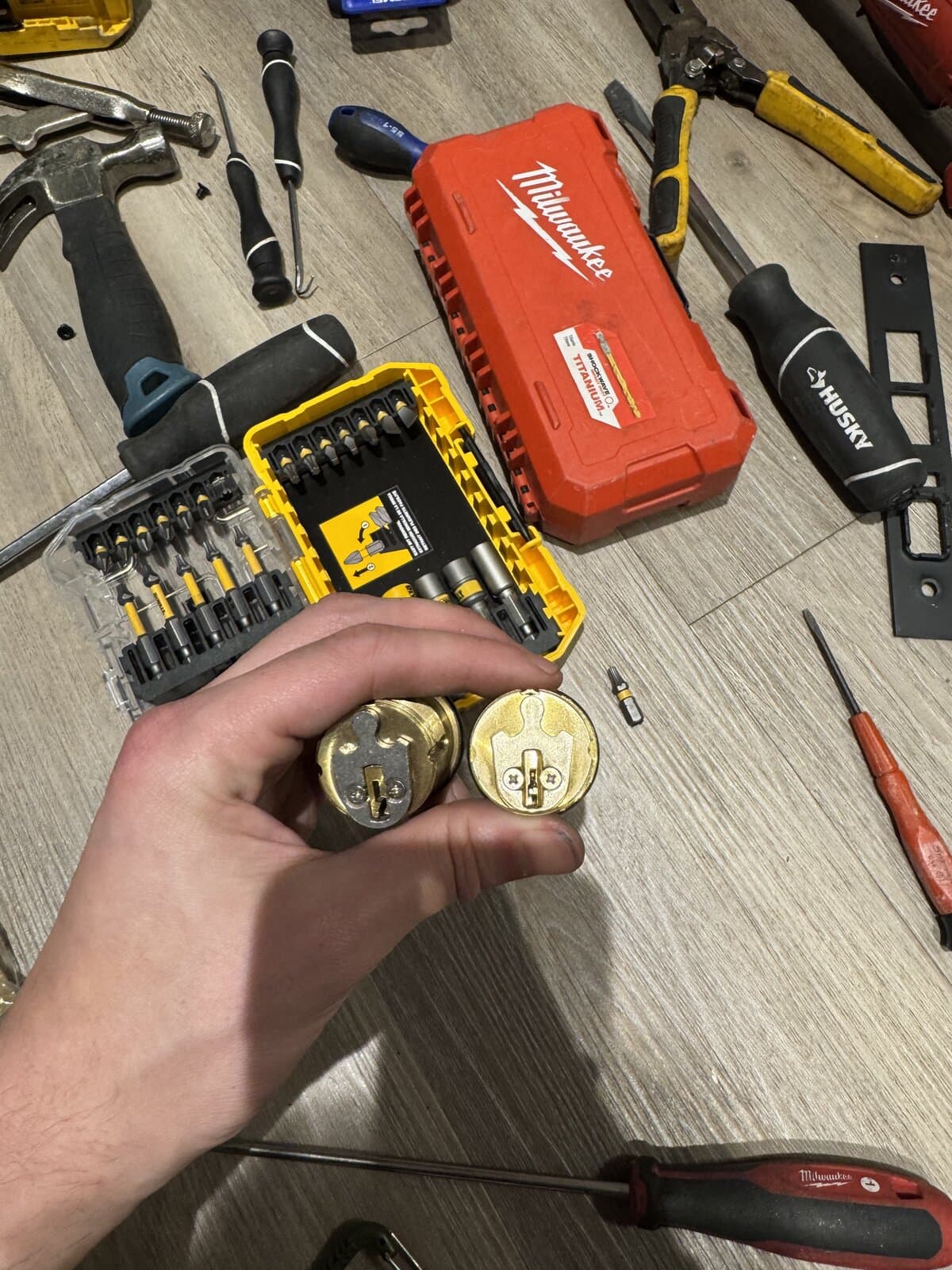
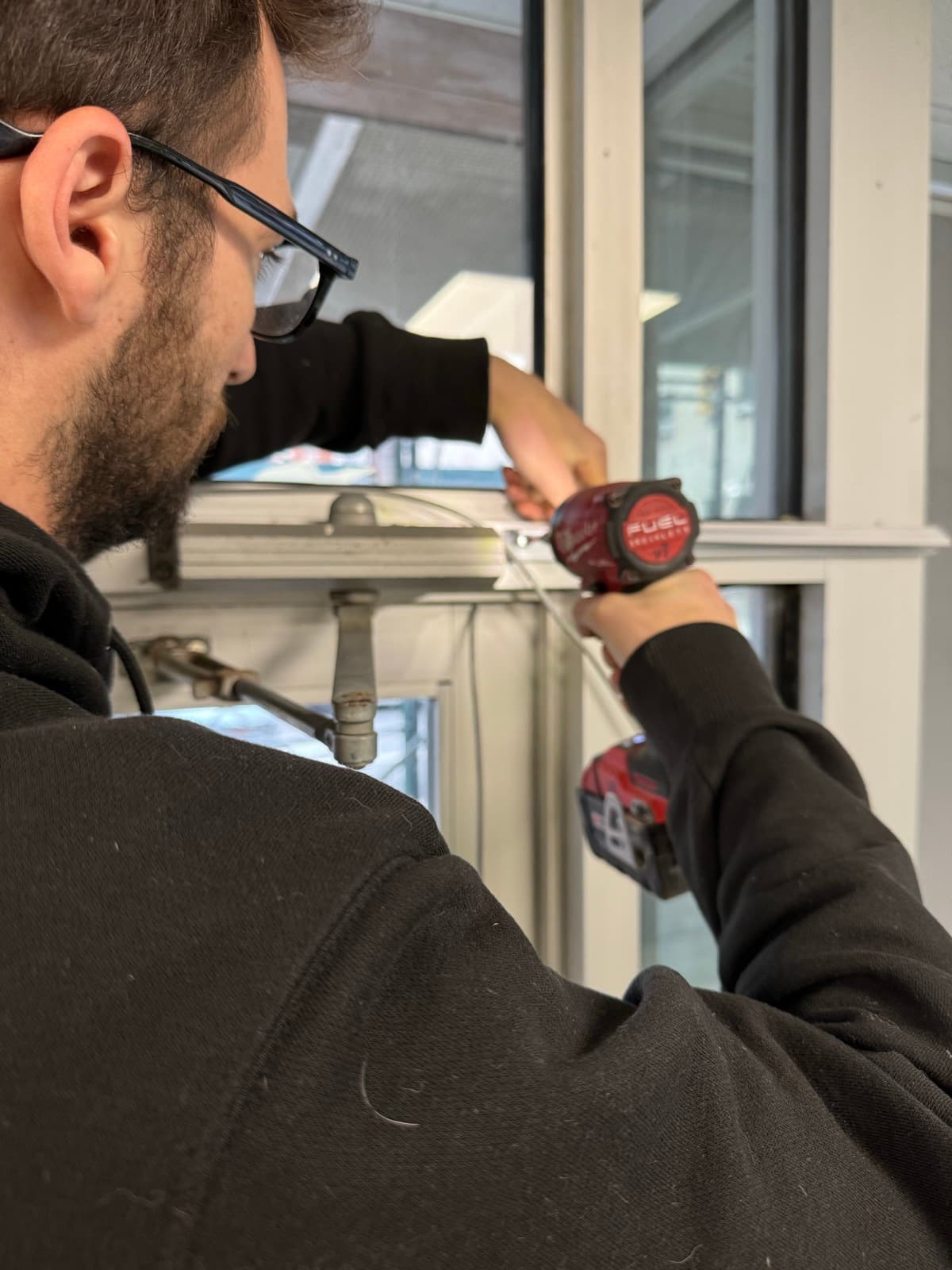
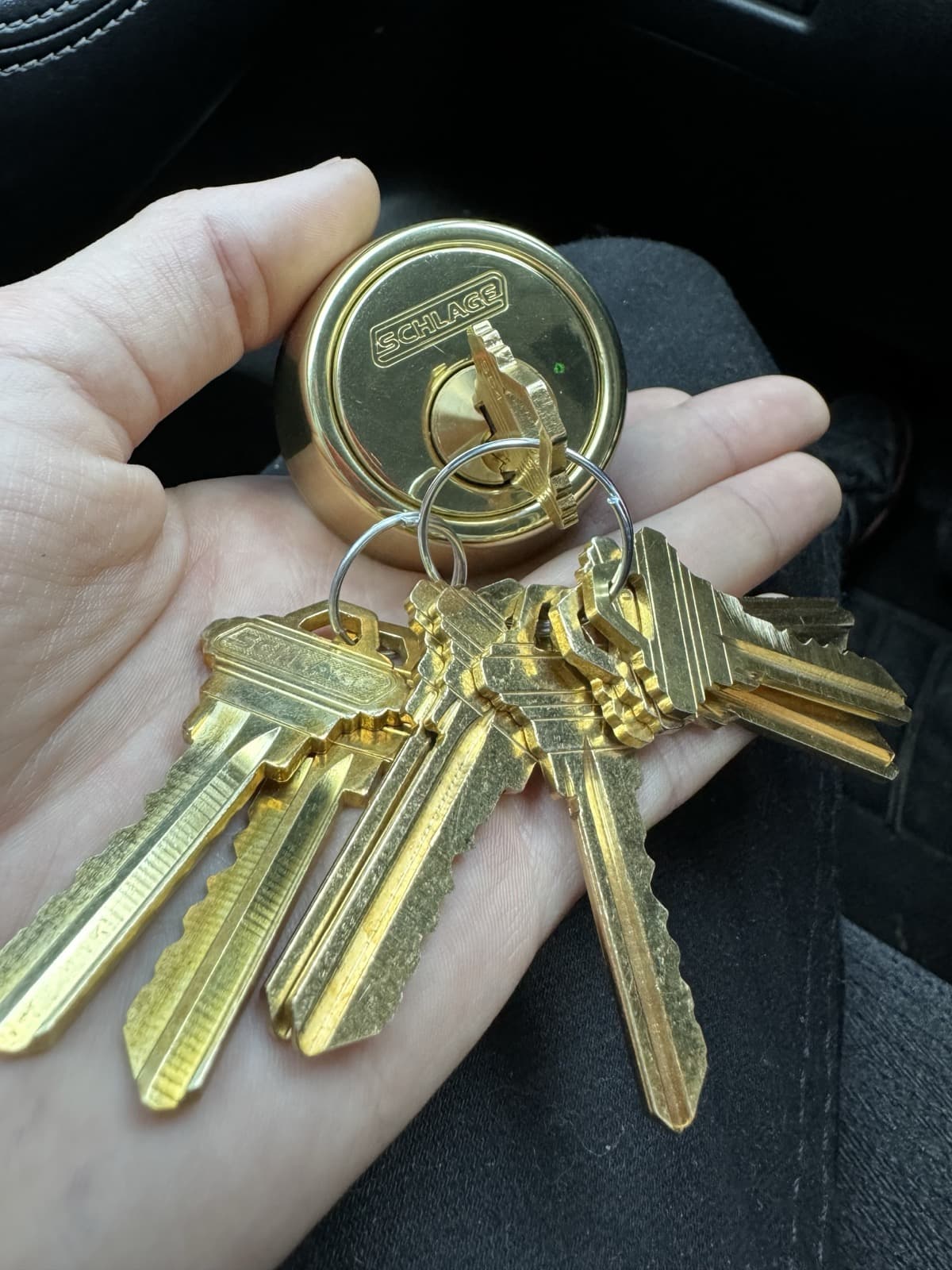
Real installs, real photos
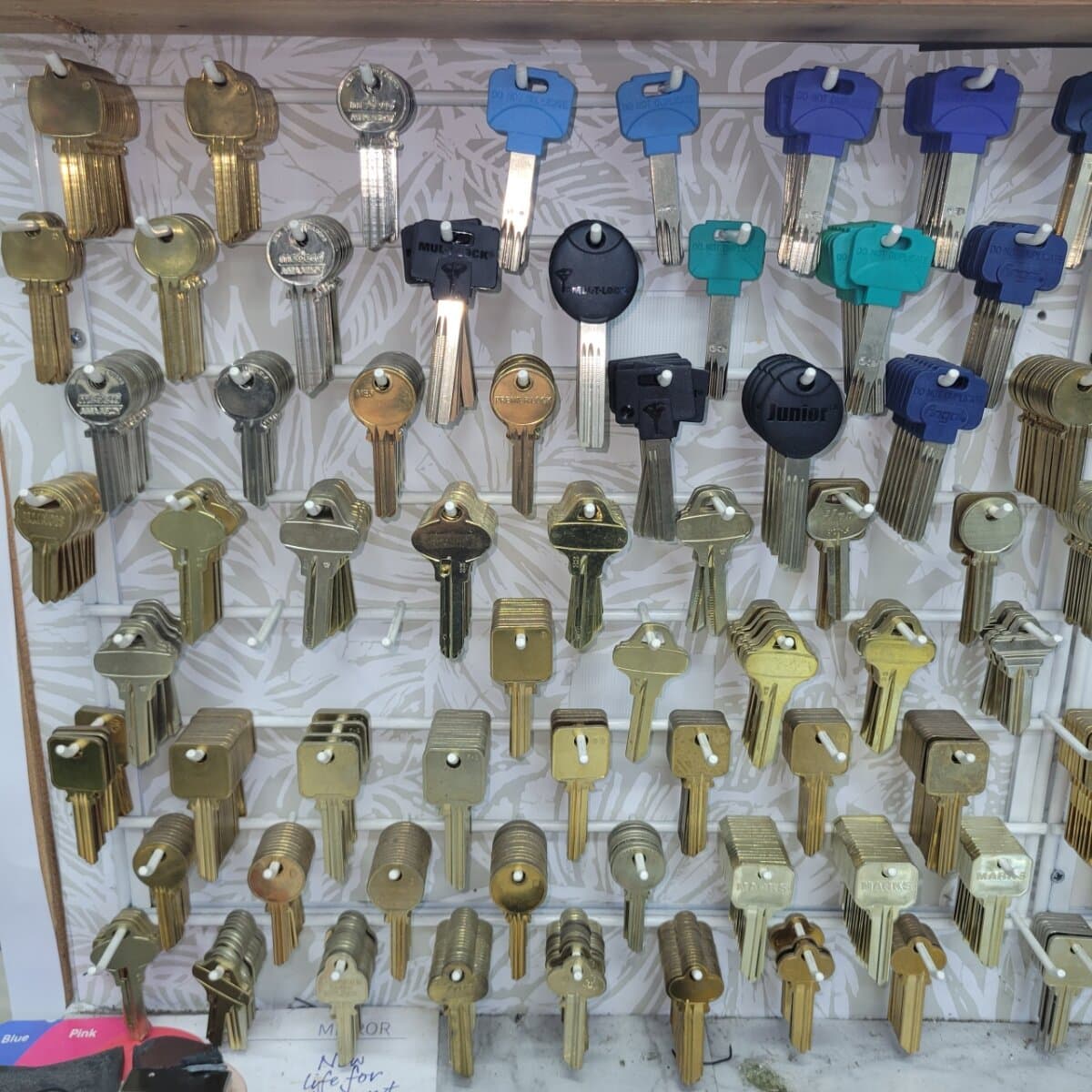
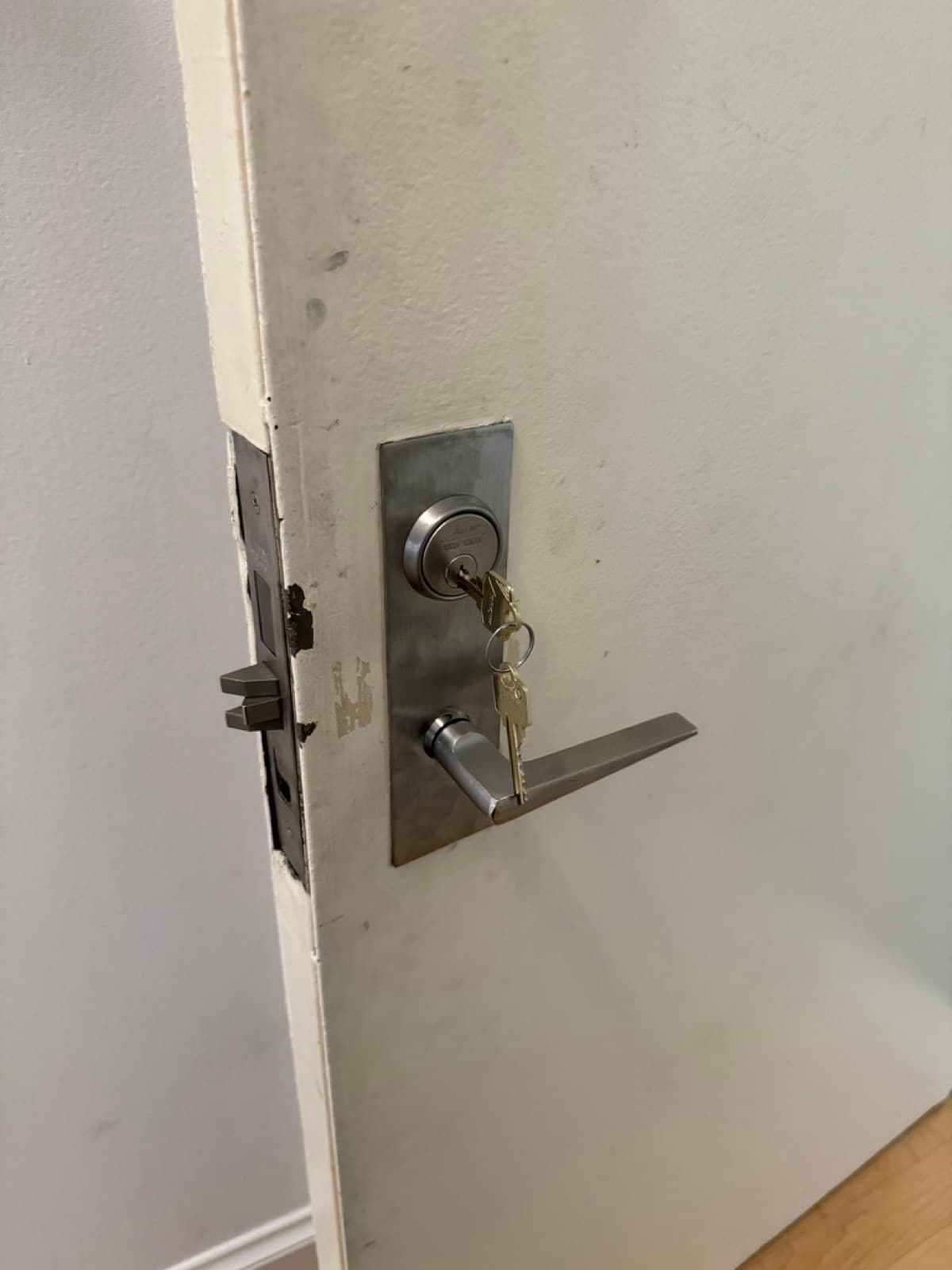
How it works
- 1
Survey and keying chart
We walk the building, list every door and its hardware — mortise, rim, cylindrical — and interview you on who needs access to what. The output is a written keying chart: levels, key symbols, and door assignments you approve before anything is pinned.
- 2
Keyway and hardware selection
We choose the keyway (open, or restricted Mul-T-Lock / Maxtek for controlled duplication), reusing existing cylinders where their condition allows and replacing only what's worn or incompatible.
- 3
Pinning and installation
Cylinders are pinned to the chart in-house at our shop, then installed door by door. Every change key and master is tested in every cylinder it should — and should not — operate.
- 4
Records, keys, and handover
You receive masters and change keys per the chart, signed for by key symbol. We retain the keying record and authorization list, so future keys, added doors, and lost-master recoveries are executed against the system as designed.
How pricing works
Every master keys job is priced after an on-site diagnosis — no guesswork and no surprises. We diagnose the real issue, explain your options in plain language, and give you clear pricing before any work begins.
Request your on-site quote
Tell us what's going on — we'll get back to you with next steps and honest pricing.
Frequently asked
Does master keying make my building's locks easier to pick or bypass?
Adding master pins does create extra shear lines, so a master-keyed cylinder has more theoretically valid combinations than a straight-keyed one — that's a real trade-off, not a myth. The practical answer is design and hardware: a properly charted system keeps incidental combinations to a minimum, avoids the cross-keying that plagues improvised systems, and a restricted high-security cylinder like Mul-T-Lock remains extremely resistant to picking and bumping even when master keyed. The insecure version of master keying is the one done ad hoc over decades by whoever showed up — which is what most older NYC buildings actually have, and what a documented rebuild fixes.
Our super quit and we can't get his master key back. Do we have to rekey the whole building?
Not necessarily the whole building — the answer depends on what his key opened, which is exactly what a keying chart tells you. If he held a building master, every cylinder that master operates needs re-pinning; apartment change keys can often stay valid, so tenants may not need new keys at all, which makes the job far less disruptive than it sounds. If the system was undocumented, we survey and decode what's actually in the doors first, then rebuild on a clean chart so the next departure is a scoped re-pin instead of a crisis. This is also the moment most owners move the masters to a restricted keyway, so the next ex-employee can't have quietly made copies beforehand.
As a landlord, am I allowed to keep a master key to tenant apartments?
Yes — NYC landlords routinely retain access for emergencies and repairs, and multiple-dwelling rules effectively require the owner to be able to get into units when it matters. What the master key does not change are the access rules: outside genuine emergencies, entry requires proper notice for repairs or inspections, and a tenant's own key must never open a neighbor's door. A designed system actually protects you here, because it eliminates accidental cross-keying and gives you a record showing exactly who was issued which key — useful the day a tenant claims someone entered their unit. If a tenant adds their own lock, that's a lease conversation, not a locksmith workaround we'll perform without the tenant's authorization.
Can a tenant or employee copy their key — or worse, the master — at a hardware store?
On an open keyway, yes: any standard key, including a master, can be duplicated in a minute wherever blanks are sold, and there is no meaningful way to prevent it — 'do not duplicate' stamps are a suggestion, not a control. That's why we recommend building any system with real stakes on a restricted keyway. With Mul-T-Lock or Maxtek, blanks aren't available to hardware stores and every key is cut only for authorized signers against the system's record, so the count of existing keys is a fact you can verify rather than hope about. Many owners split the difference: restricted masters, standard change keys — the masters are the keys that can hurt you.
We have old mortise locks on the apartments and modern levers in the offices. Can one system cover both?
Yes, and in NYC it almost always has to — pre-war mortise cases, rim cylinders on jimmy-proof drop bolts, and modern cylindrical levers routinely coexist in the same building. As long as the cylinders run (or can be converted to run) a common keyway, they can all be pinned into one chart, and mortise, rim, and standard-profile cylinders are all available in that shared keyway, including the Mul-T-Lock restricted lines we stock. Where a cylinder is too worn or an obsolete format can't be sourced, we replace just that cylinder, not the visible hardware — important on brownstone and landmark doors where the original trim should stay. The survey stage exists precisely to catch these hardware realities before the chart is finalized.
How long does a master key system take, and what's the lead time for extra keys later?
A small building — say a three- or four-family brownstone — typically goes from survey to installed system within days: the chart is drafted after the walkthrough, and pinning plus installation is usually a single day on site since we pin in our own shop rather than sending cylinders out. Larger or restricted-keyway systems add hardware lead time, and we give you the real schedule at quote, not an optimistic one. Afterward, change keys and masters are cut against your keying record at 170 Hicks St or 232 Leonard St — standard keys promptly, restricted keys for authorized signers, generally same visit for common formats. Because we hold the records, a phone call with the key symbol is enough to have keys ready for pickup.
Related
You might also need
Locksmith Services
Two Brooklyn offices. Licensed techs, stocked vans, keys cut on our own machines — 24 hours a day.
Learn moreHigh-Security Lock Installation
Mul-T-Lock and Maxtek cylinders in stock — keys that can't be copied at a hardware store, locks that don't open for a bump key.
Learn moreAccess Control System Installation
Fobs, cards, keypads, and mobile credentials — with the door hardware and egress compliance most access vendors get wrong.
Learn moreIntercom System Installation & Repair
Lobby panels, apartment stations, and smartphone entry — installed, repaired, and rewired by NYC's door and security specialists.
Learn moreDoor Repair & Door Supply
Doors that stick, sag, or won't latch — fixed right the first time.
Learn moreNeed it handled today?
Call for same-day service across the five boroughs, or send a few details and we'll get right back to you.