Magnetic Lock (Maglock) Installation & Repair
A magnetic lock (maglock) is an electromagnet mounted to the door frame that holds a steel armature plate on the door with 600 to 1200 pounds of force whenever power is applied. Downtown Door Repair & Security installs, repairs, and brings maglocks up to NYC code across the five boroughs — including request-to-exit sensors, battery-backed power supplies, and the fire alarm tie-in that NYC law requires so the door releases automatically when the alarm sounds. Offices at 170 Hicks St, Brooklyn Heights and 232 Leonard St, Williamsburg. NYC DCWP license #2109597, open 24/7.
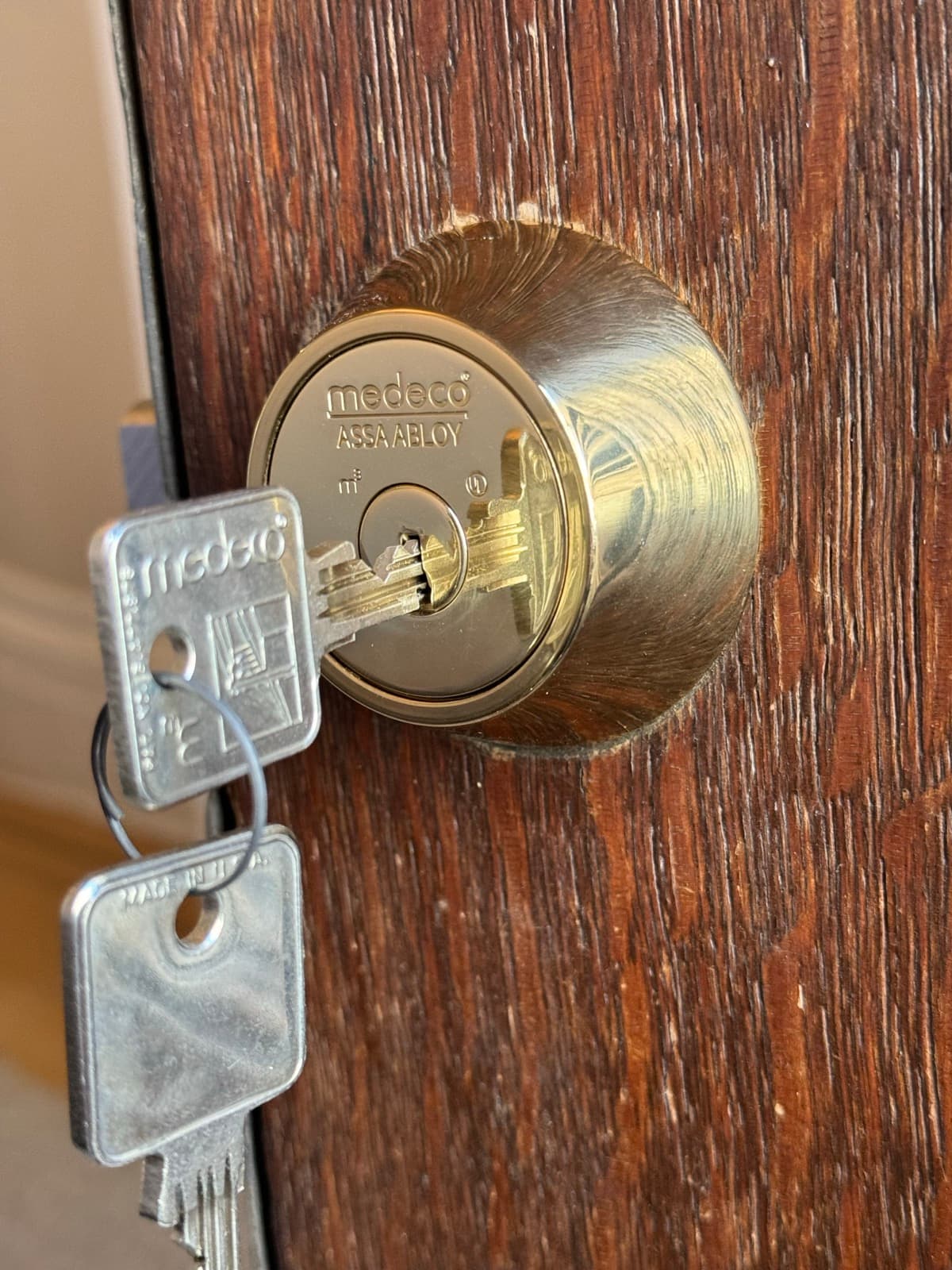
A magnetic lock is the simplest piece of electrified door hardware there is: an electromagnet bolted to the header of the frame, and a flat steel armature plate bolted to the door. Energize the magnet and the plate can't pull away — a standard single maglock holds around 600 pounds of direct pull, and the 1200lb units we install on main entrances and roof doors will outlast the door itself in a pull test. There's no latch, no bolt, no keeper to align, which is exactly why maglocks are the go-to on doors where a mechanical lock is a headache: glass storefront doors, narrow-stile aluminum doors, gates, and doors that have sagged so badly nothing else lines up anymore.
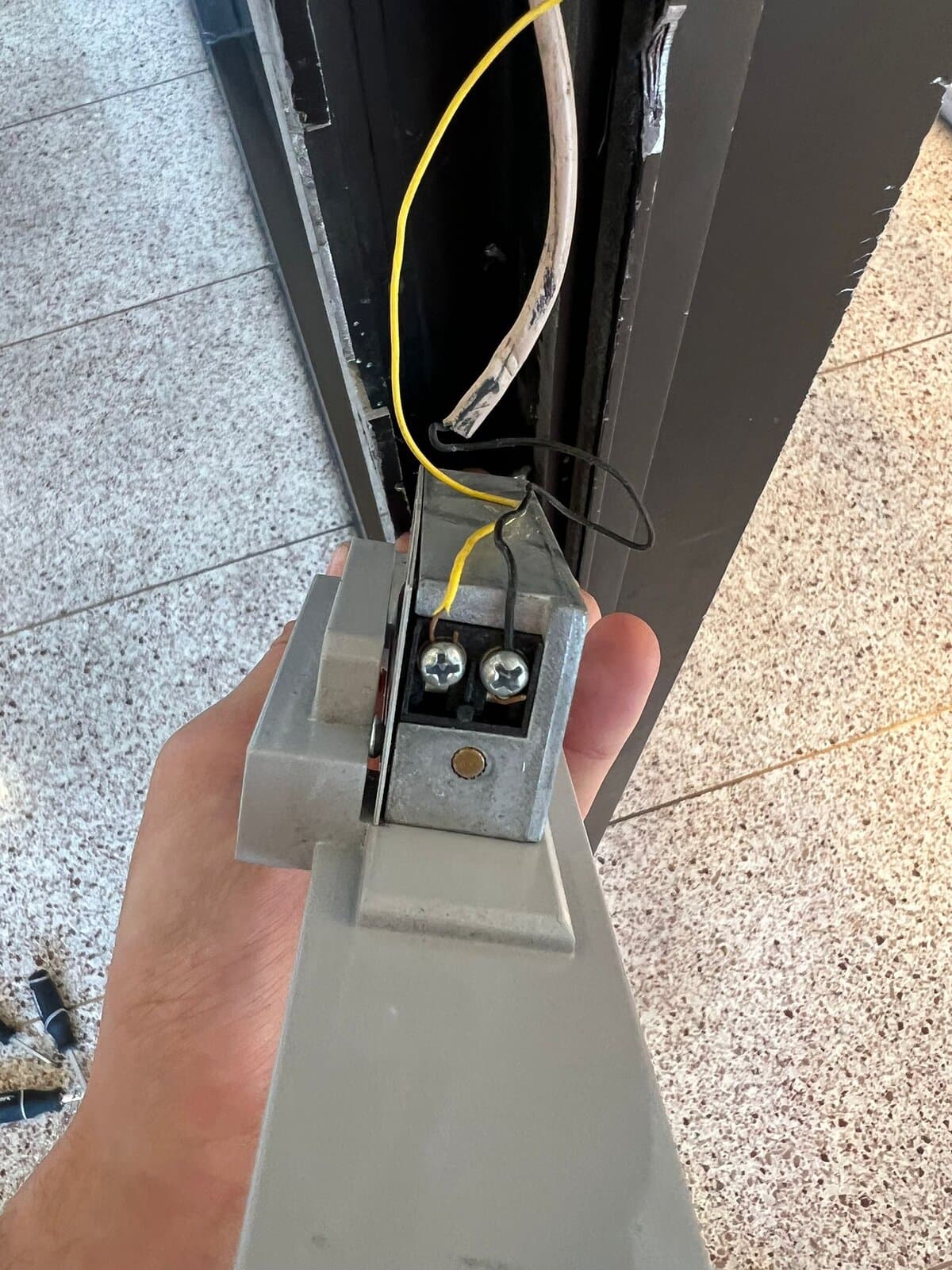
The tradeoff is that a maglock is always fail-safe: cut the power and the door is unlocked, period. That is not a flaw — it's the reason maglocks are permitted on egress doors at all. But it means the install is really an electrical system, not just a lock. Every maglock we hang gets a proper power supply, sized for the coil draw, with battery backup so a blip in building power doesn't leave your door swinging open. What the battery backup does not do — by design — is hold the door locked during a fire alarm. NYC code requires that any maglock on a door in the path of egress drop out the moment the fire alarm activates, so we land a relay on your fire alarm panel (or coordinate with your alarm company to do it) as part of the job, not as an afterthought.
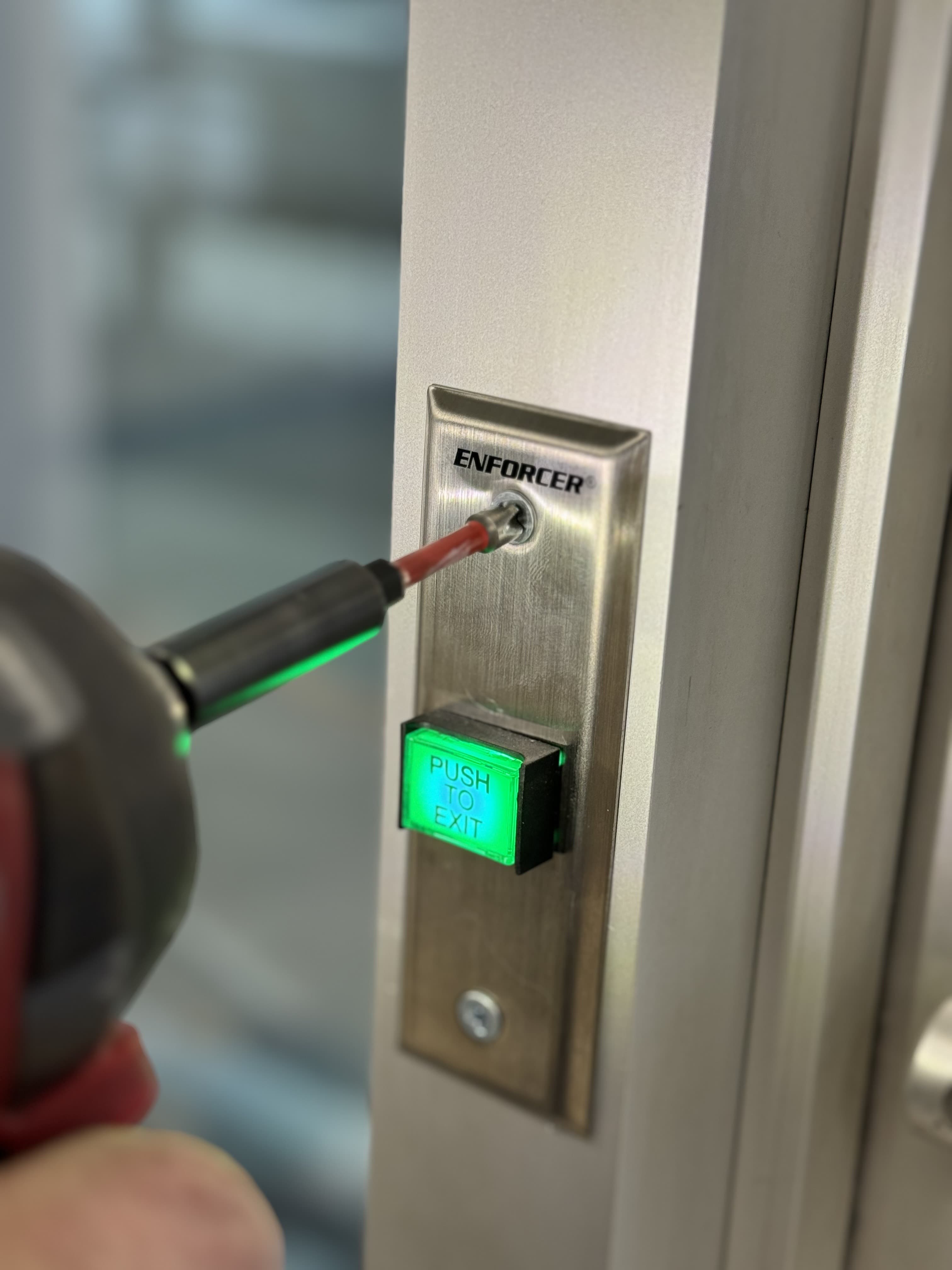
Free egress is the other half of a legal maglock. Someone walking up to the door from inside must be able to leave without knowing anything about the system. The standard setup we install is layered: a request-to-exit (REX) motion sensor above the door that drops the magnet as you approach, a labeled push-to-exit button as the manual release, and where the client wants a cleaner look, a Seco-Larm Enforcer wave-to-open sensor so nobody touches anything at all. We stock the Enforcer wave-to-open units and piezoelectric exit plates at our Brooklyn offices — piezo plates have no moving parts to wear out, which matters on a lobby door that cycles hundreds of times a day. On the entry side, the maglock releases from whatever credential system you run: keypad, card reader, fob, intercom buzzer, or a full access control panel.
Where maglocks earn their keep in NYC is on doors that fight every other kind of hardware. Aluminum storefront doors with a half-inch of play in the frame, steel doors on roof bulkheads, courtyard gates, interior vestibule doors between the sidewalk and your lobby — the magnet doesn't care about alignment, it just needs flat contact between coil and plate. We also install magnetic door holders (which we stock) for the opposite job: holding a fire door open all day and releasing it to swing shut on alarm. Same physics, opposite duty, and both live or die on how cleanly the low-voltage wiring is run, which is most of what separates a maglock that works for a decade from one that starts dropping doors randomly after the first winter.
When you need it
- Your building's entry door is glass or narrow-stile aluminum and mechanical locks keep failing or won't fit
- You're adding buzzer, keypad, fob, or card-reader entry and need electrified locking to go with it
- An existing maglock stays locked during fire alarm testing — that's a code violation that needs a fire alarm tie-in now
- The door releases randomly or 'clunks' open — usually a failing power supply, dead backup battery, or corroded armature contact
- FDNY or a DOB inspection flagged your egress door hardware
- You need a roof door, basement door, or courtyard gate secured without giving out keys
- Tenants prop the door because the current lock is a hassle — free-egress maglock setups remove the excuse
- You want fire doors held open during business hours but self-closing on alarm (magnetic door holders)
Real installs, real photos
How it works
- 1
Site survey & code check
We look at the door, frame, and header, confirm which direction it swings, measure the stile, and — most importantly — determine whether the door is in the path of egress and whether the building has a fire alarm panel to tie into. That decides the sensor package and release wiring before any hardware is chosen.
- 2
Hardware & power design
We spec the magnet (600lb single, 1200lb, or double-door pairs), brackets for the frame type (Z-brackets for outswing, angle brackets or glass-door kits as needed), a power supply sized for total coil draw with battery backup, and the exit devices: REX motion, push-to-exit button, or Enforcer wave-to-open sensor from our stock.
- 3
Installation & wiring
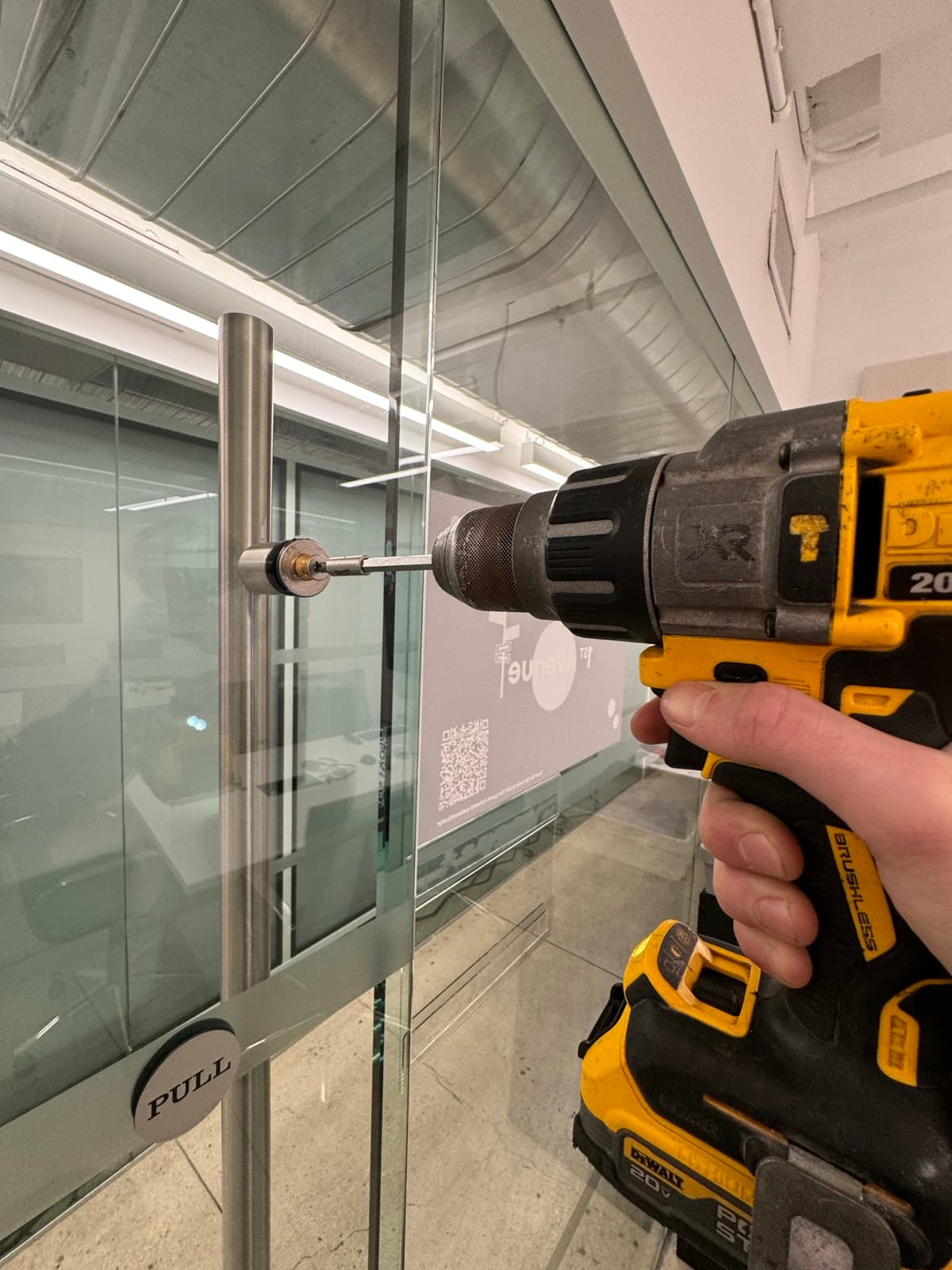
Magnet and armature plate mounted and shimmed for full-face contact, low-voltage runs fished and concealed where possible, power supply mounted in a serviceable location, exit sensors wired to break coil power directly (not just through the controller), and the fire alarm relay landed so alarm activation cuts the lock.
- 4
Testing & handoff
We pull-test the bond, verify free egress from the inside via every release device, cut power to confirm fail-safe behavior, trigger the fire alarm relay to confirm the door drops, and walk your super or property manager through resets, battery replacement intervals, and what to check before calling us.
How pricing works
Every magnetic locks job is priced after an on-site diagnosis — no guesswork and no surprises. We diagnose the real issue, explain your options in plain language, and give you clear pricing before any work begins.
Request your on-site quote
Tell us what's going on — we'll get back to you with next steps and honest pricing.
Frequently asked
Is a maglock even legal on my exit door in NYC?
Yes — with conditions, and the conditions are the whole job. Because a maglock has no mechanical release, NYC code allows it on egress doors only when free egress is guaranteed: a sensor or exit device on the inside that releases the lock, and a tie-in that drops the magnet automatically when the fire alarm activates. A maglock wired to a keypad with no REX sensor and no fire alarm release is the kind of install that fails an FDNY inspection and creates real liability. We install to the code-compliant configuration by default and we retrofit plenty of maglocks that someone else installed bare.
What happens in a power outage?
The magnet releases and the door is unlocked — every maglock is fail-safe, that's inherent to the technology. That's why we install battery-backed power supplies on every job: normal utility blips and brief outages won't unlock your building. The batteries carry the lock for hours, not days, so for a door that must stay secured through extended outages we'll either add a mechanical deadlatch or storefront lock as a nighttime backstop, or recommend fail-secure hardware like an electric strike instead. What we will never do is defeat the fire-alarm release to keep a door locked — that part stays fail-safe no matter what.
Maglock or electric strike — which one should I use?
It depends on the door and on what you need during a power failure. A maglock is fail-safe (power loss = unlocked), works on almost any door regardless of alignment, and is the practical choice for glass and aluminum storefront doors. An electric strike works with your existing latch, can be fail-secure (power loss = still locked), and leaves the door usable with a key like a normal door. Rough rule for NYC buildings: strikes on interior doors and doors with good latching hardware, maglocks on storefronts, gates, and problem doors. We install both daily and will tell you on-site which one your specific door wants.
Can you tie the maglock into my existing fire alarm?
Yes — that tie-in is a standard part of our maglock installs, not an extra. If your building has a fire alarm panel, we land a relay so alarm activation cuts power to the magnet instantly, which is what NYC code requires for maglocks on egress doors. Where the panel is maintained by an alarm company under contract, we coordinate with them so the relay is added cleanly and their monitoring isn't disturbed. If the building has no alarm panel at all, we'll tell you honestly what your code-compliant options are for that door rather than installing something that can't pass inspection.
How long does a maglock installation take?
A straightforward single door — magnet, brackets, REX sensor, exit button, power supply, and clean wire runs — is typically done in one visit. Add a fire alarm tie-in, a card reader or intercom release, or a double-door pair and it can extend, mostly on the wiring paths: fishing low-voltage through a finished lobby ceiling takes longer than running it through a back-of-house wall. We give you a realistic window after the site survey instead of quoting a fantasy number over the phone, and because we're open 24/7 we can schedule installs outside your business hours so the entrance is never blocked during the day.
My maglock keeps releasing on its own. What's wrong with it?
The usual suspects, roughly in order: a power supply whose backup battery has died and can no longer smooth out voltage dips; a REX motion sensor aimed too wide so lobby foot traffic or even HVAC-blown signage trips it; corrosion or grime on the armature plate breaking full-face contact and gutting the holding force; or a loose low-voltage splice that opens intermittently. All of these are diagnosable in one service visit with a meter and a pull test. What you shouldn't do is let a flaky maglock ride — a door that's randomly unlocked is worse than no lock, because everyone believes it's secured.
Related
You might also need
Access Control System Installation
Fobs, cards, keypads, and mobile credentials — with the door hardware and egress compliance most access vendors get wrong.
Learn moreElectric Strike Installation & Repair
The buzz-in door, done right: cut clean into the frame, aligned to the latch, wired to whatever lets people in.
Learn moreIntercom System Installation & Repair
Lobby panels, apartment stations, and smartphone entry — installed, repaired, and rewired by NYC's door and security specialists.
Learn morePanic Bar & Exit Device Installation
One push and everyone's out. That's the law — and it's also just a good door.
Learn moreDoor Repair & Door Supply
Doors that stick, sag, or won't latch — fixed right the first time.
Learn moreNeed it handled today?
Call for same-day service across the five boroughs, or send a few details and we'll get right back to you.