Panic Bar & Exit Device Installation
Panic hardware — the horizontal push bar on a commercial exit door — lets anyone leave a building with a single push, no keys and no knowledge, which is exactly what NYC egress code and the FDNY require on many commercial exit doors. Downtown Door Repair & Security installs and repairs rim, mortise, and vertical rod exit devices on steel, wood, and aluminum storefront doors across the five boroughs, including outside trim for keyed entry, alarmed bars, and electrified devices tied to access control. Offices at 170 Hicks St, Brooklyn Heights and 232 Leonard St, Williamsburg. NYC DCWP license #2109597, open 24/7.
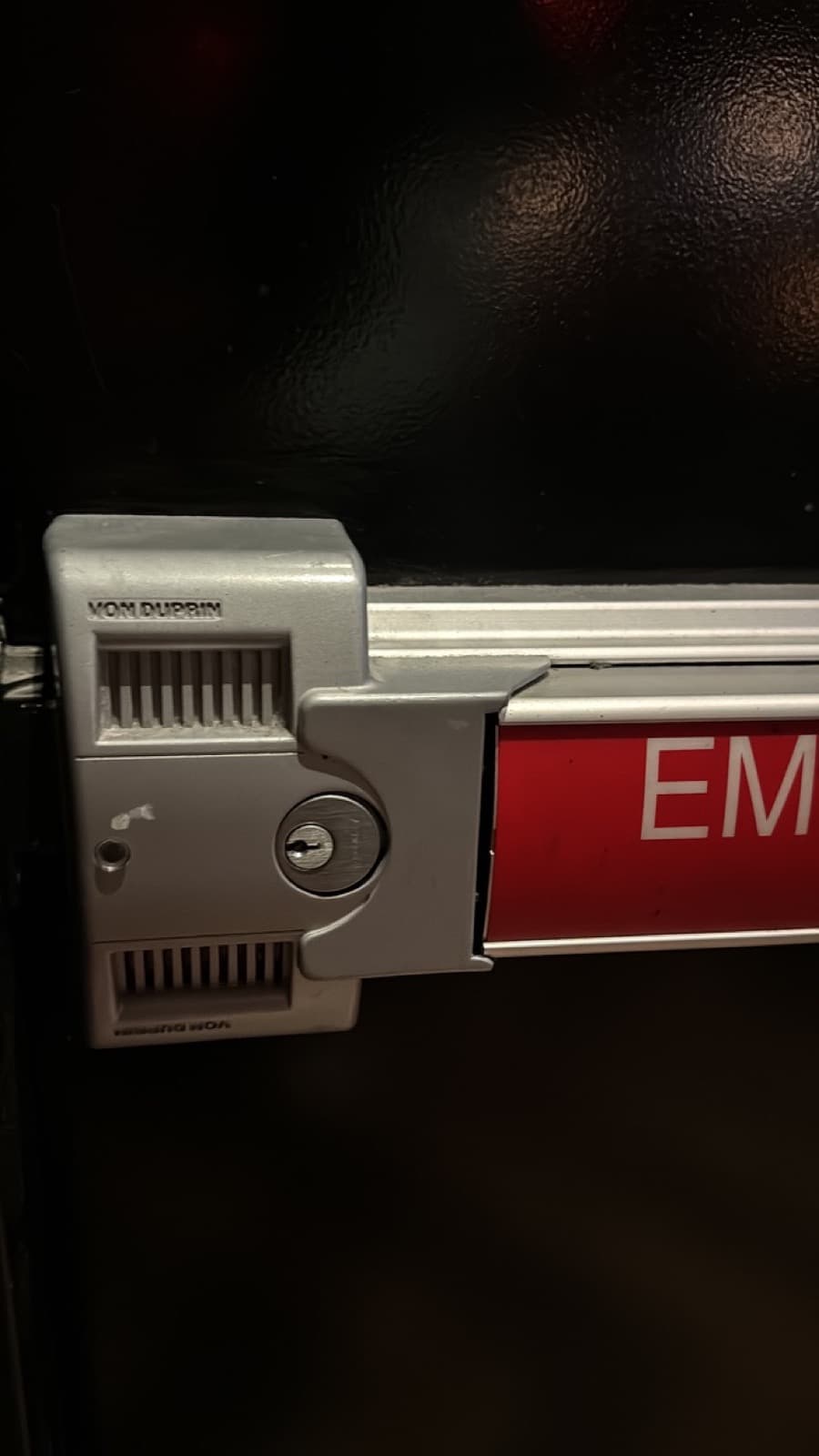
Panic hardware (an 'exit device' in the trade) is the push bar that spans an exit door and retracts the latch when anything presses against it. The principle behind it is grim and simple: in a fire or a crowd panic, people surge toward the door, and the door has to open from that surge alone — no lever to find, no thumbturn to twist, no key, no instructions. NYC egress code requires exactly this single-motion, no-special-knowledge exit on doors serving assembly spaces, many commercial occupancies, and most public-facing exits, and FDNY inspectors check for it. A chained panic bar or a deadbolt added above one is the violation inspectors photograph first, and it's the kind that comes with real consequences because it's the kind that kills people.
There are three main types, and the door dictates which one you need. A rim device mounts on the surface of the door and latches into a strike on the frame — the workhorse for single steel and wood doors, fast to install and easy to service. A mortise device pairs the push bar with a mortise lock body inside the door edge, giving you heavier-duty latching and better keyed-trim options on doors that already have a mortise pocket. Vertical rod devices latch at the top and bottom of the door instead of at the edge, which is how you secure double doors with no center mullion — each leaf gets its own device, and both leaves open independently with a push. Vertical rods come surface-mounted or concealed inside the door, and the concealed kind on a narrow-stile aluminum storefront door is a genuinely finicky piece of hardware that punishes sloppy installation with bottom rods that drag and top latches that don't throw.
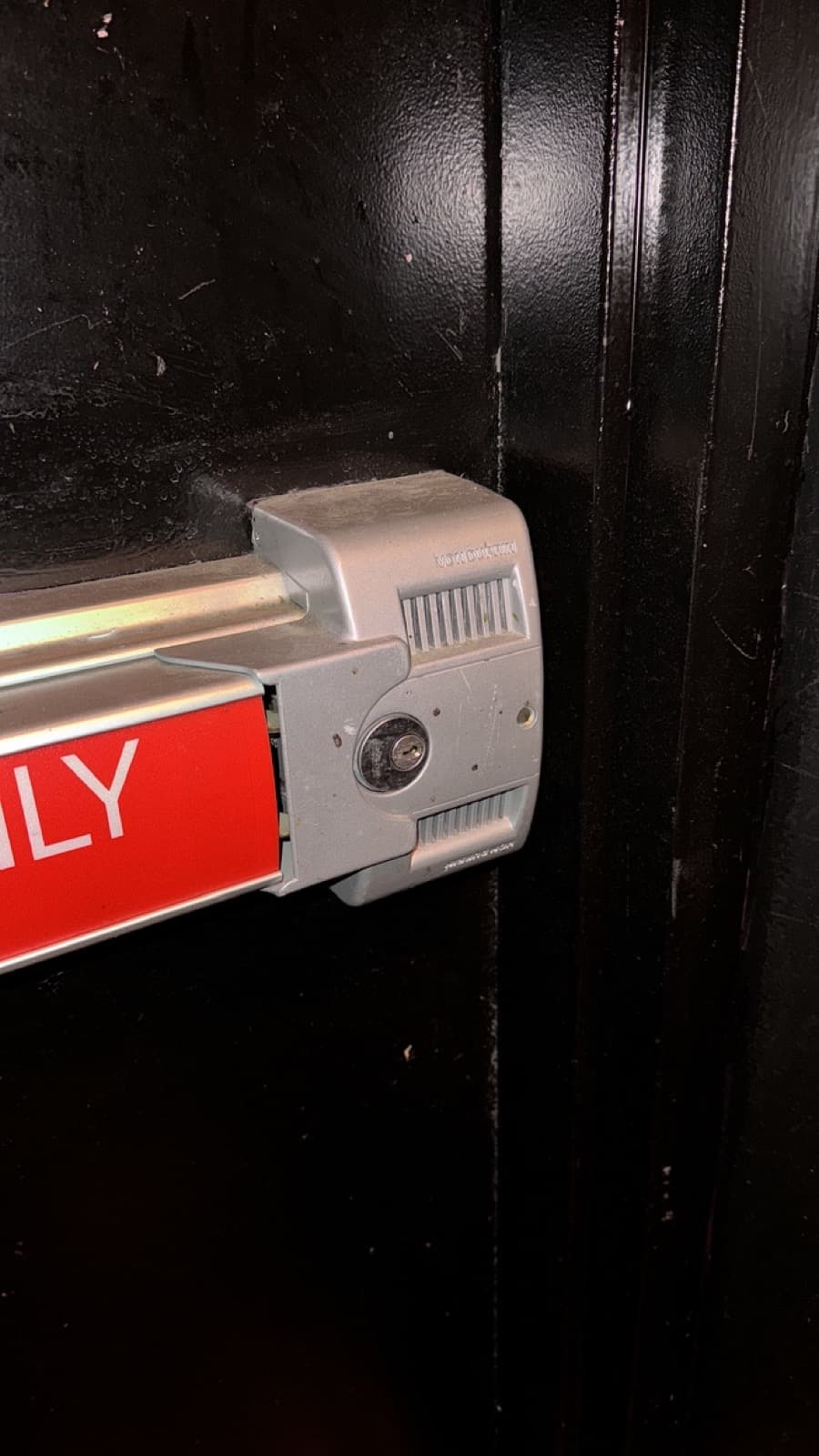
A panic bar controls exit; the question of who gets in is separate, and that's where trim and electrification come in. Outside trim — a keyed lever or pull with a cylinder — gives staff normal keyed entry while the bar side stays pure egress. 'Exit only' doors get no outside trim at all. For alarmed exits, we install devices with a built-in local alarm that screams when the bar is pushed, which is how retail keeps a required exit legal without inviting shrinkage through the back door. And for buildings running access control, exit devices can be electrified — latch retraction or electrified trim wired to your card readers — so the same door is a controlled entrance from outside and an unconditional exit from inside. NYC also has narrow provisions for delayed egress devices, which hold the door for a short timed delay after the bar is pushed while sounding an alarm; they're only permitted in specific occupancies, they must release instantly on fire alarm or power loss, and we'll tell you plainly whether your building qualifies before anyone orders hardware.
Repair is at least half of the panic hardware work we do in Brooklyn and Manhattan, because these devices lead hard lives: delivery carts slam them, closers slam the doors they're on, and street-facing exits live in weather. Typical failures are dogging mechanisms that no longer hold the latch retracted for business hours, rim latches chewed down until the door can be pulled open without pushing the bar, vertical rods knocked out of adjustment so the bottom bolt grinds the threshold or the top latch misses its strike, and storefront devices whose narrow aluminum stiles have cracked around the mounting points. We stock common devices and parts at our two Brooklyn offices, we cut and reinforce doors that weren't originally prepped for exit devices, and because a dead panic bar on an occupied building is a life-safety problem and not a Monday problem, we run these calls 24/7.
When you need it
- FDNY or DOB flagged an exit door — chained bar, added deadbolt, or missing panic hardware
- Opening a restaurant, bar, gym, church, or any assembly space where occupancy triggers panic hardware requirements
- The bar pushes but the latch doesn't release, or releases only with a hard shove — worn latch or rod misalignment
- Double exit doors need securing without a center mullion — vertical rod devices on both leaves
- The back door is a theft problem but must legally stay an exit — alarmed panic hardware
- Dogging is broken and staff are wedging the door open during business hours
- You want keyed entry from outside on an exit-only door — adding outside trim with a cylinder
- Tying an exit door into access control without touching its egress function — electrified latch retraction or trim
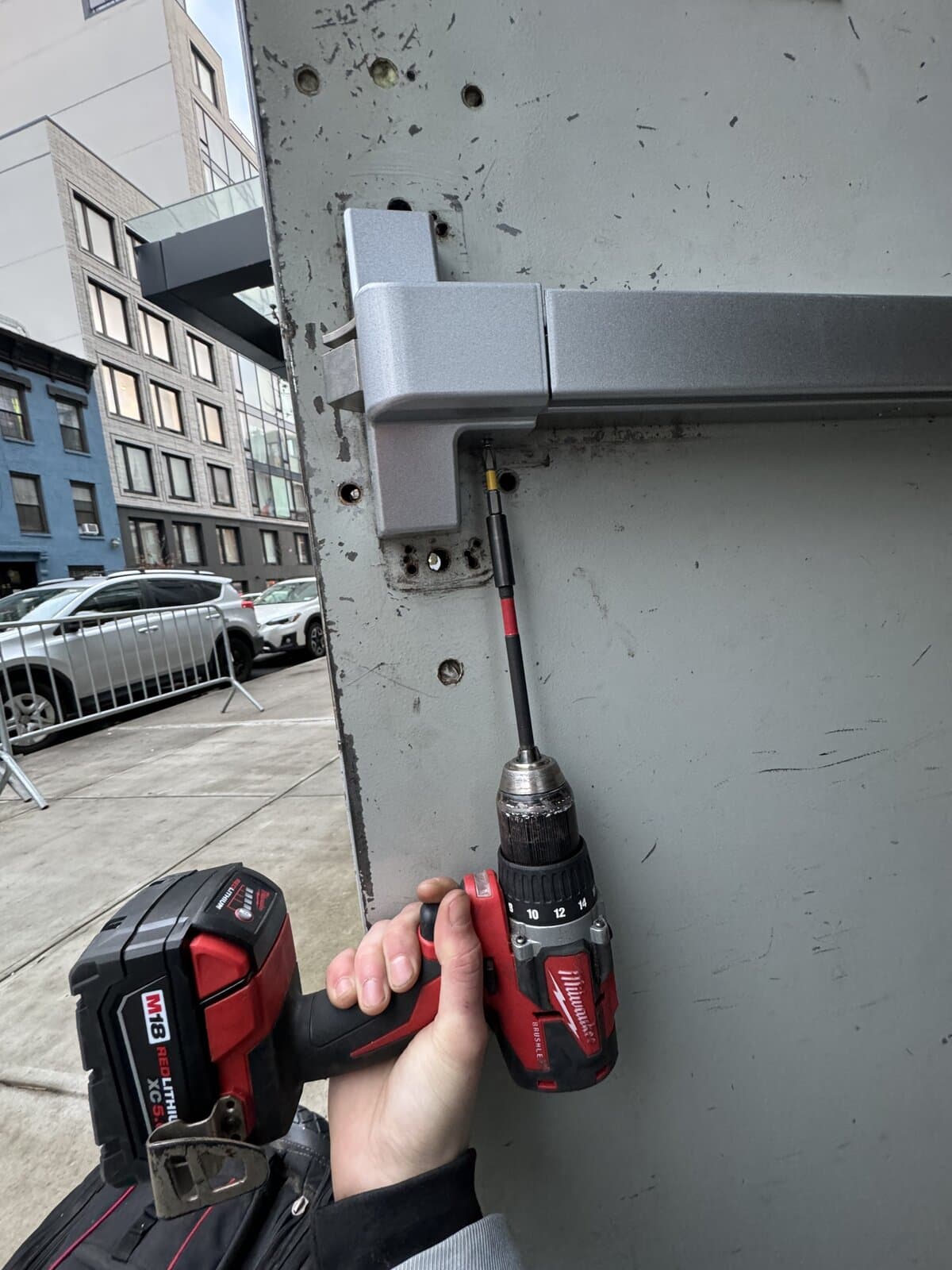
Real installs, real photos
How it works
- 1
Door & occupancy assessment
We confirm what the opening requires: door material and thickness, single or pair, fire rating, whether the space's use and occupancy trigger a panic hardware requirement, and what's failing on any existing device. Street-facing storefront doors also get checked for stile width and frame condition.
- 2
Device selection
Rim, mortise, or vertical rod, matched to the door — with fire-rated ('fire exit hardware') devices on rated openings, which cannot have mechanical dogging. We spec outside trim for entry needs, alarmed devices where theft is the driver, and electrified options if the door joins your access control.
- 3
Installation & fitting
Door prepped and reinforced as needed, device mounted level at code height, strikes set and — on vertical rod jobs — top and bottom latches adjusted so both throw fully with the door closed under closer pressure. Outside trim and cylinders keyed to your existing system where wanted.
- 4
Function & egress testing
We push-test at multiple points along the bar, verify single-motion egress with the door under pressure, test dogging, alarm, and key trim, confirm rated doors still positively latch, and cycle the closer-and-latch interaction the way real traffic will — then walk your manager through the device before we leave.
How pricing works
Every panic hardware job is priced after an on-site diagnosis — no guesswork and no surprises. We diagnose the real issue, explain your options in plain language, and give you clear pricing before any work begins.
Request your on-site quote
Tell us what's going on — we'll get back to you with next steps and honest pricing.
Frequently asked
Does my NYC business legally need panic bars?
It depends on your occupancy classification and occupant load, not on the business type alone. Assembly spaces — restaurants, bars, venues, houses of worship, gyms — trigger panic hardware requirements at occupant loads that many NYC storefronts hit easily, and other commercial occupancies require it on certain exit doors as well. The practical version: if the public gathers in your space, assume the exit doors need single-motion, no-key egress and get the specific answer for your certificate of occupancy. What's never legal is 'solving' security by chaining a required exit or stacking a deadbolt above a panic bar — that's the violation FDNY writes first. We'll assess your actual doors against your actual occupancy on-site.
Can I lock a door that has a panic bar on it?
From the outside, yes — from the inside, never. The correct setup is outside trim with a key cylinder (or an electrified strike or trim on access control) so entry is controlled, while the bar side always opens with one push. What you cannot do is add any inside-locking device — deadbolt, slide bolt, chain, hook — to a door required to have panic hardware, because the moment egress takes two motions or a key, the door is illegal and dangerous. If your real problem is people using an exit as an unauthorized entrance or walk-out, the legal fixes are an alarmed device, better door position switches on your alarm, or a camera on the door — and we install all three.
What's the difference between rim, mortise, and vertical rod devices?
Rim devices are surface-mounted and latch into a strike on the frame — simplest, most serviceable, and right for most single doors. Mortise devices use a lock body mortised into the door edge, giving heavier latching and more robust keyed trim; they make sense on doors that already have a mortise prep or need the extra duty. Vertical rod devices skip the edge latch entirely and throw bolts into the frame head and the floor, which is how you secure a pair of double doors with no post between them — each leaf works independently. Concealed vertical rods hide inside the door for looks and tamper resistance, and they're the standard answer on narrow-stile aluminum storefront pairs, where there's no meat in the stile for anything else.
My panic bar sticks or the door won't latch behind people. Can it be repaired?
Usually, yes — and usually in one visit. Sticking bars are most often gummed or worn internal springs and a latch chewed out of shape by years of slamming; doors that won't relatch behind traffic typically have a strike out of alignment, a closer too weak to overcome the latch, or on vertical rod devices, rods knocked out of adjustment so the bottom bolt drags before the top latch seats. We carry common devices and parts in stock at our Brooklyn offices, so when a device is genuinely dead — cracked case, stripped dogging, obsolete model — we can typically swap it the same day rather than leaving an exit door unsecured overnight.
How long does a panic bar installation take?
A rim device on a single steel door that's already in decent shape is a same-day, single-visit job, including outside trim if you want keyed entry. Pairs with vertical rod devices take longer because both leaves get devices and four latching points need adjustment under real closing pressure; concealed rods in narrow-stile storefront doors are the longest, since the hardware lives inside the stile. Doors that were never prepped for exit devices may need reinforcement first. We schedule around your operating hours — 24/7 — so a retail back door or restaurant exit gets done before open or after close, and the door is never out of service while you're full of customers.
Can a panic bar door be part of my access control system?
Yes, and it's the right way to put an exit door on access control. From the inside nothing changes — the bar always opens the door mechanically, with no dependence on power or software, which is what keeps it legal. From the outside, entry is granted electronically: either an electrified strike that releases for the reader, electrified outside trim, or electric latch retraction inside the device itself, which also enables push-pull traffic during business hours. On fire-rated doors we spec fire exit hardware versions that keep positive latching. If you're also considering delayed egress — holding the door briefly with an alarm after a push — that's allowed only in limited NYC occupancies and must drop instantly on fire alarm, so ask us before buying hardware.
Related
You might also need
Door Repair & Door Supply
Doors that stick, sag, or won't latch — fixed right the first time.
Learn moreElectric Strike Installation & Repair
The buzz-in door, done right: cut clean into the frame, aligned to the latch, wired to whatever lets people in.
Learn moreMagnetic Lock (Maglock) Installation & Repair
1200 pounds of holding force, wired to release the instant your fire alarm says so.
Learn moreAccess Control System Installation
Fobs, cards, keypads, and mobile credentials — with the door hardware and egress compliance most access vendors get wrong.
Learn moreSecurity Gates & Roll-Down Gates
Roll-down gates that open smooth and lock tight.
Learn moreNeed it handled today?
Call for same-day service across the five boroughs, or send a few details and we'll get right back to you.