Electric Strike Installation & Repair
An electric strike replaces the fixed strike plate in your door frame with a motorized keeper that pivots open on an electric signal, letting the door open without retracting the latch — the hardware behind every NYC 'buzz-in' door. Downtown Door Repair & Security cuts in and wires electric strikes on hollow metal, aluminum storefront, and wood frames across the five boroughs, matched to your latch, your frame, and the fail-safe or fail-secure behavior your door actually needs. Offices in Brooklyn Heights (170 Hicks St) and Williamsburg (232 Leonard St). NYC DCWP license #2109597, open 24/7.
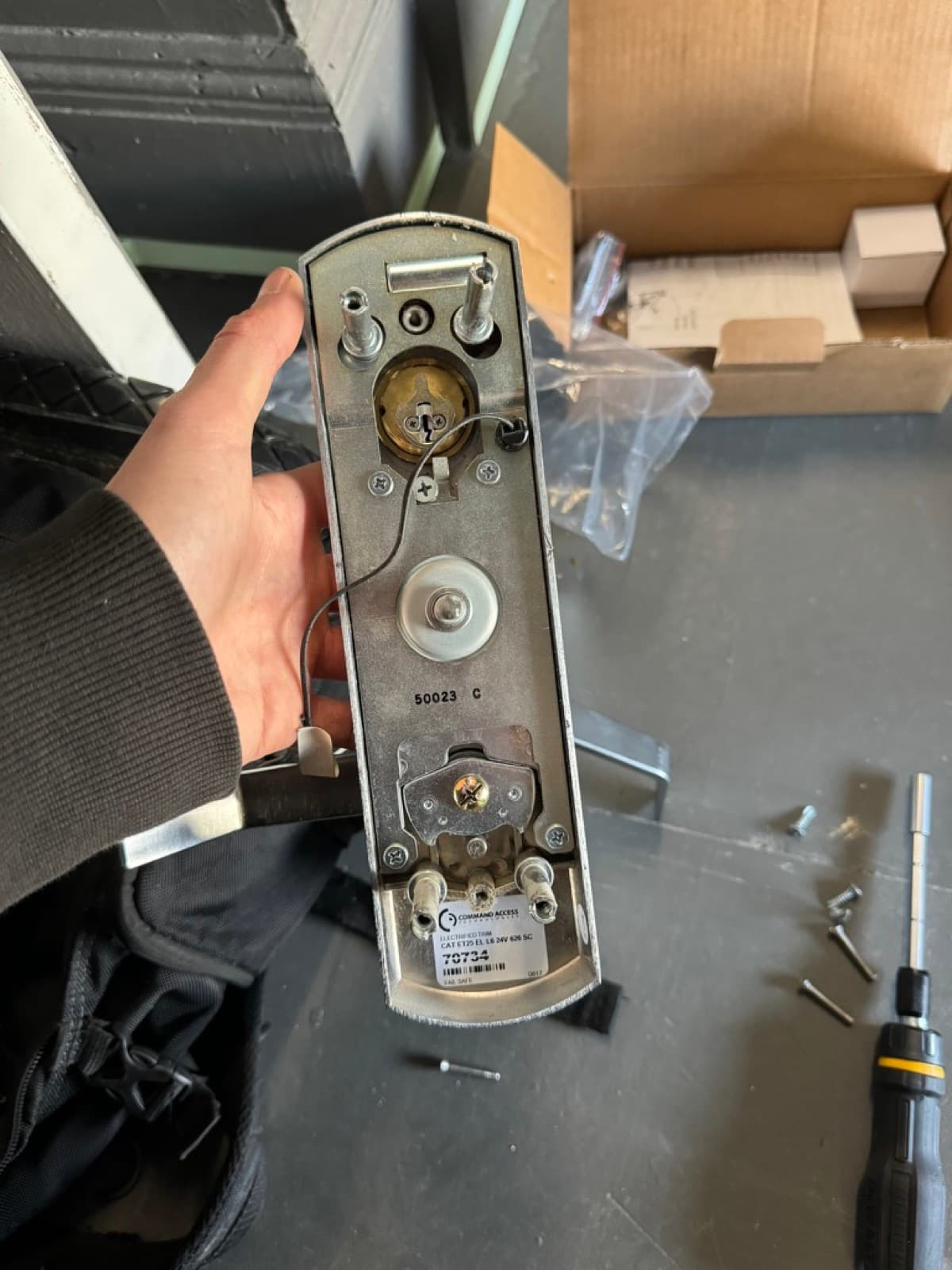
An electric strike is the part of a buzz-in door that people never see working. Your door keeps its normal lockset or panic device with its normal latch — but instead of that latch seating into a fixed plate, it seats into a strike whose keeper is held by a small solenoid or motor. Send it voltage (from an intercom buzzer, keypad, card reader, or access control panel) and the keeper swings free, so the door pushes open with the latch still extended. Release the door and the latch snaps back into a locked keeper. Nothing about how the door works with a key changes, which is the electric strike's core advantage over a maglock: the door remains a normal door.
The decision that matters most is fail-secure versus fail-safe. A fail-secure strike (the default for most perimeter doors) stays locked when power is lost — you can still exit freely, because egress comes from the latch side and turning the lever or pushing the panic bar always works, and you can still enter with a key. A fail-safe strike unlocks when power drops, which is required in specific cases like stairwell doors that must allow re-entry during an alarm, and for certain fire-rated openings the fail-secure/fail-safe choice interacts with the door's rating — a fire-rated opening needs a fire-rated, fail-secure strike so the door stays positively latched during a fire. We sort this out per door, because getting it backwards either locks people into a stairwell or leaves your back door unlocked every time the power flickers.
The install itself is frame surgery, and the frame material dictates the whole approach. Hollow metal frames — the standard in NYC commercial corridors — get the strike pocket cut with precision: enlarge the existing strike prep, deal with the grout or mortar that frames are often filled with, and land the strike body so the keeper sits exactly where the latch lands. Aluminum storefront frames are a different animal: narrow, thin-walled, often with a shallow backset and a Adams Rite-style deadlatch, so they take specific narrow-stile strikes and careful cutting so you don't gut the frame's strength. Wood frames are the most forgiving to cut but the least forgiving over time, since seasonal movement changes keeper alignment. In every case the wire path has to be planned before the first cut — fishing 12–24V down a grouted hollow metal frame is half the job.
Keeper alignment is where cheap installs die. The latch has to land centered on the keeper with the door fully closed and the weatherstripping compressed; a strike set a few millimeters off leaves the door 'buzzing but not opening' because the latch is binding against the keeper under door pressure — the single most common electric strike complaint in the city, especially on storefront doors where the closer slams the door and the frame has racked over the years. We cut for the real, as-hanging position of your door, not the spec sheet's ideal, and we test under closer pressure. The result is a buzz-in door that opens with a fingertip push every time, works with a key when the intercom dies, and holds the latch strength your insurance company assumes you have.
When you need it
- You're installing or upgrading an intercom and need the door to actually buzz open
- Adding keypad, fob, or card-reader entry to an office suite, lobby, or back-of-house door
- Your current strike buzzes but the door won't open — keeper misalignment or a burned-out solenoid
- The building's buzz-in system is dead and tenants are keying everyone in manually
- You want the door to stay LOCKED during a power outage (fail-secure) instead of maglock behavior
- A storefront aluminum door needs electrified entry but a maglock isn't wanted on the glass
- Fire-rated corridor or stairwell doors need electrified access that keeps positive latching
- Landlord/tenant turnover: rekeying plus electrified entry on the same door in one visit
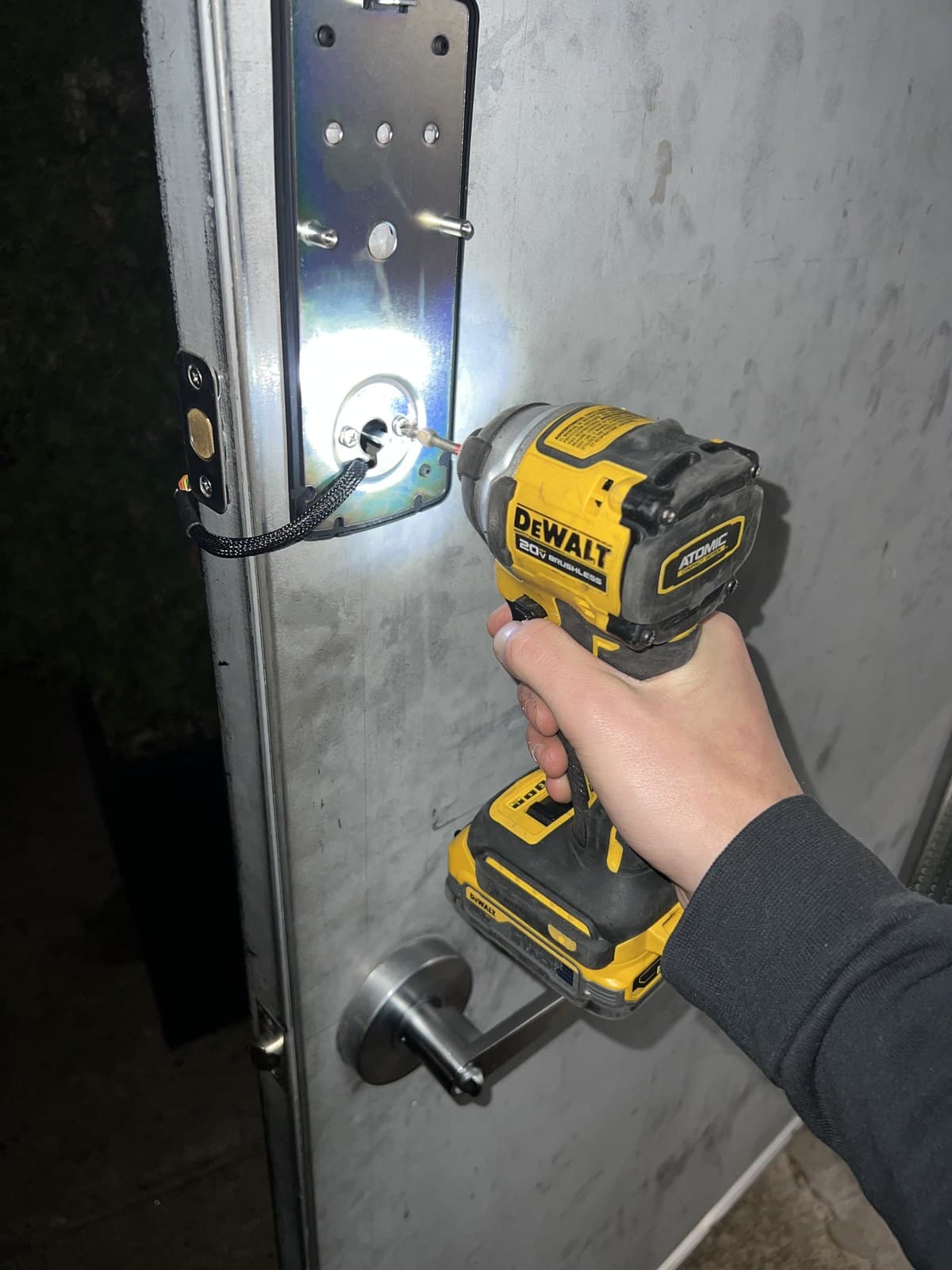
Real installs, real photos
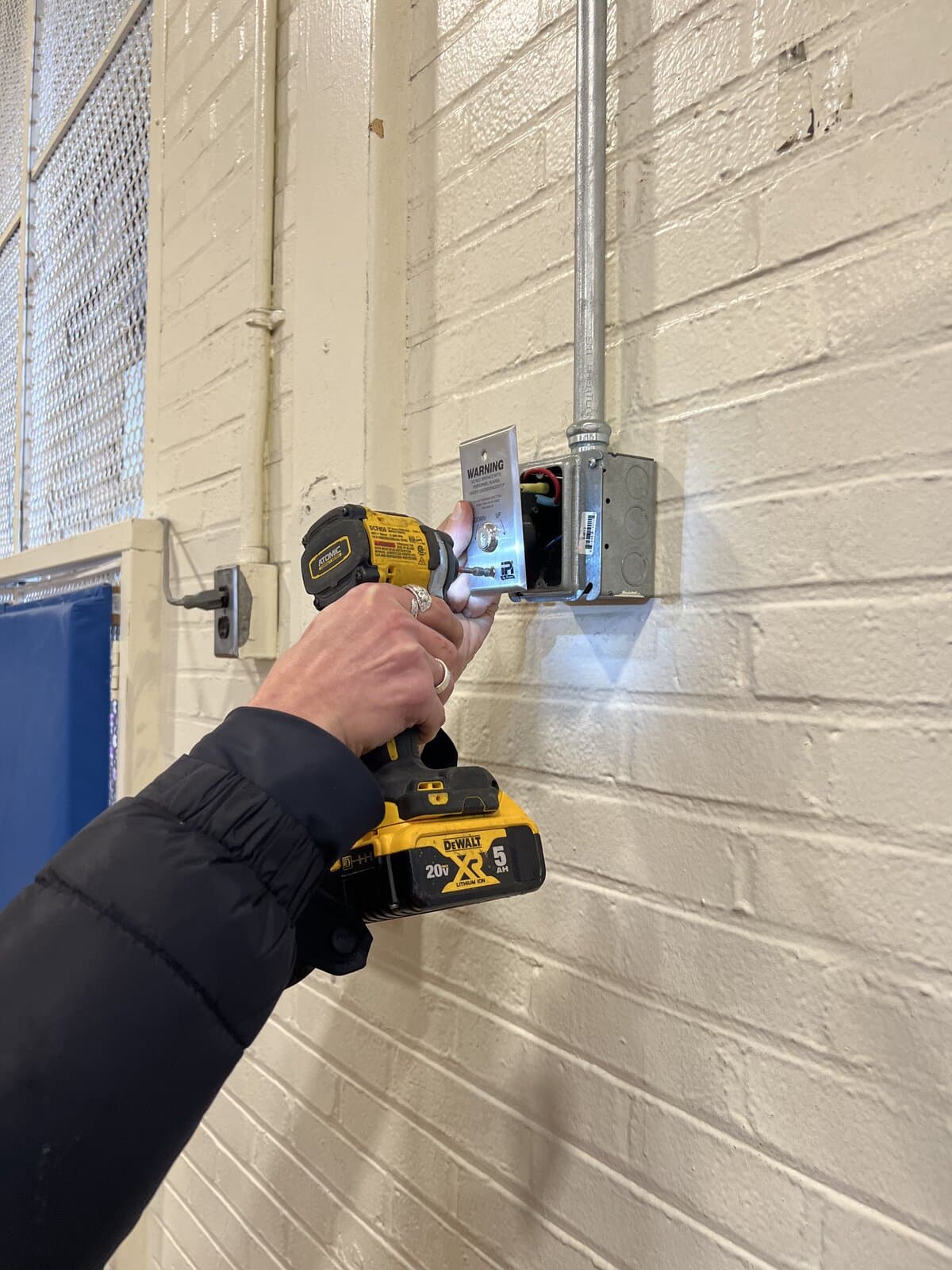
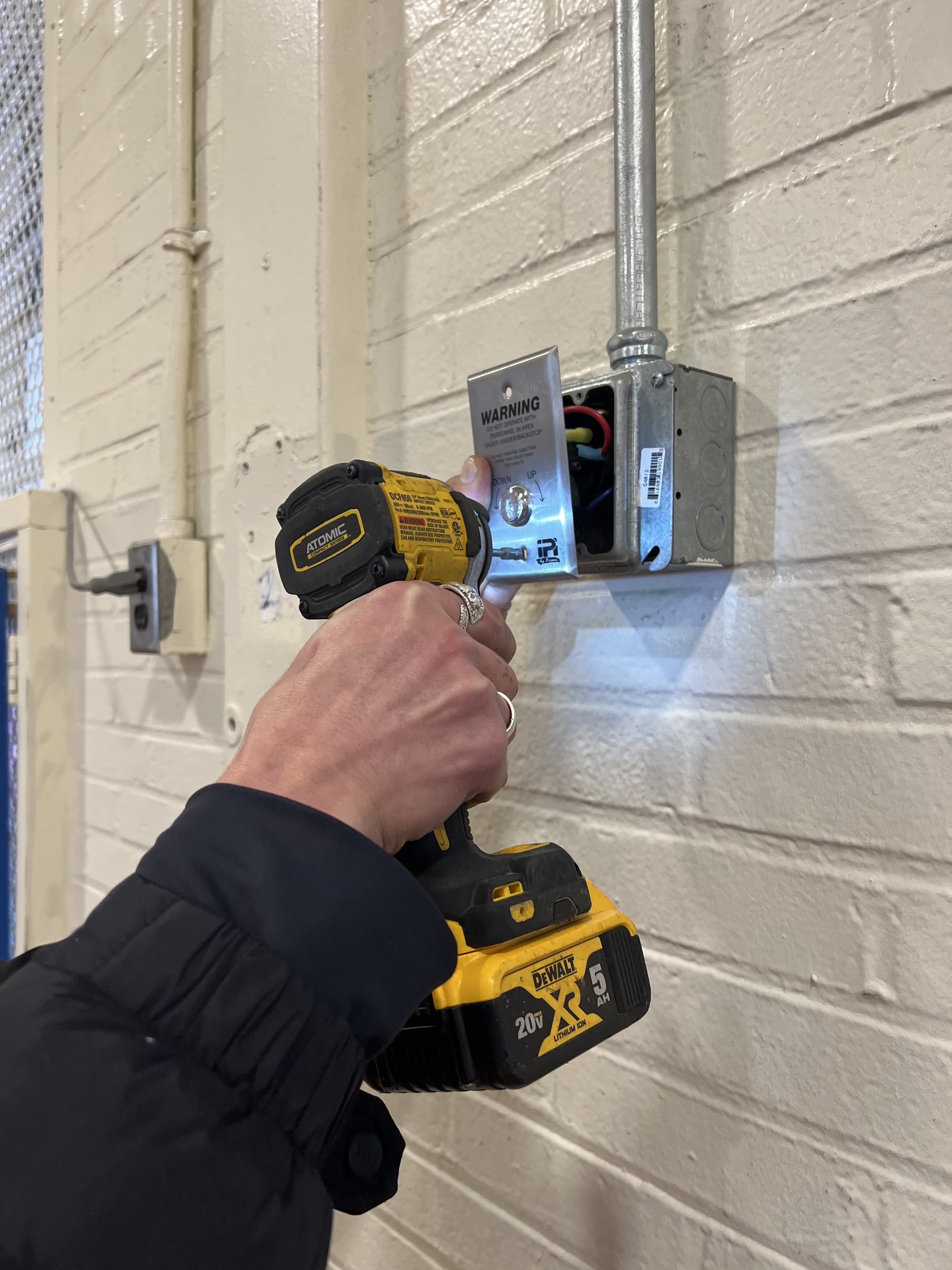
How it works
- 1
Door & latch assessment
We identify your latch hardware (cylindrical lockset, mortise lock, rim or Adams Rite-style storefront deadlatch, panic device), measure the frame material and depth, check how the door actually hangs and closes today, and confirm fire rating and egress requirements for the opening.
- 2
Strike selection & fail mode
We match a strike to the latch and frame — heavy-duty hollow metal strikes for corridors, narrow-stile strikes for aluminum storefronts — and lock in fail-secure or fail-safe behavior with you based on what the door must do when power is lost, plus voltage matched to your intercom or access panel.
- 3
Cutting, mounting & wiring
Frame cut cleanly for the strike body (grinding out grout in filled hollow metal frames where needed), keeper aligned to the latch under real closing pressure, low-voltage run fished to the release source — intercom amplifier, keypad, reader controller, or access panel — with concealed routing wherever the building allows.
- 4
Live testing & handoff
We cycle the door dozens of times under closer pressure, test release from every credential and the buzzer, verify key override and free egress, confirm fail mode by cutting power, and leave your manager knowing exactly which box to check before calling anyone if the buzz-in ever stops working.
How pricing works
Every electric strikes job is priced after an on-site diagnosis — no guesswork and no surprises. We diagnose the real issue, explain your options in plain language, and give you clear pricing before any work begins.
Request your on-site quote
Tell us what's going on — we'll get back to you with next steps and honest pricing.
Frequently asked
Electric strike or maglock — which one is right for my door?
Start with one question: when the power goes out, do you need the door locked or unlocked? An electric strike can be fail-secure — power fails, door stays locked, key still works, exit is still free from the inside. A maglock is always fail-safe and unlocks on power loss. Strikes also keep the door working like a normal door, which building staff and tenants appreciate. Maglocks win on doors where a latch can't do its job: glass doors, badly sagged doors, gates. For a typical office suite, corridor, or back door with decent latching hardware, we usually recommend the strike; for storefront glass and problem doors, the maglock. We'll confirm on-site in minutes.
What happens to a strike door during a power outage?
Whatever you chose on install day — that's the point. A fail-secure strike keeps the keeper locked with no power: the buzzer won't release the door, but keys work normally and people inside can always exit by turning the lever or pushing the bar, because egress never depends on the strike. A fail-safe strike releases when power drops, and is used where code demands it, like stairwell re-entry doors. If you don't know which type is on your door right now, that's worth a service visit — plenty of NYC doors have the wrong fail mode installed, and nobody finds out until an outage or an inspection.
Can you cut a strike into my aluminum storefront door frame?
Yes — it's one of the most common installs we do, and it's a specialty for a reason. Storefront framing is narrow-stile, thin-walled aluminum, usually running an Adams Rite-style deadlatch with a shallow backset, so it takes a strike built for that geometry and a careful cut that doesn't compromise the frame. Alignment matters even more here because storefront doors rack and sag with weather and slamming closers. We cut for the door's real closed position, wire down the frame cleanly, and the result is a glass storefront that buzzes open reliably without a magnet hanging over the header. If the frame is too far gone, we'll say so and give you the honest alternatives.
My door buzzes but won't open. Do I need a whole new system?
Almost never. That symptom is usually one of three things: the latch is binding against the keeper because the door or frame has shifted since install (most common — the fix is realignment, not replacement); the strike's solenoid has weakened and can't overcome door pressure; or the door closer is slamming so hard the latch preloads the keeper, which a fingertip pull while buzzing temporarily 'fixes' — a classic sign. All three are same-visit repairs. The intercom amplifier's release relay can also be the culprit, which we can isolate in minutes by testing the strike directly. Diagnosis first; we don't sell you a new system to fix an alignment problem.
How long does an electric strike installation take?
A single door with sane wire access — strike cut in, wired to an existing intercom or keypad, tested under load — is typically a same-day, single-visit job. Grout-filled hollow metal frames add grinding time, and long or awkward wire runs (through finished ceilings, across a lobby) add more than the cutting ever does. A full package with a new keypad or reader and power supply is still usually one visit. We're 24/7, so for retail and restaurants we routinely do these installs before opening or after close so your entrance never sits torn open during business hours.
Will an electric strike work with my panic bar?
Yes, when it's matched correctly. A rim-type panic device takes a surface-mounted rim strike made for exit devices, and mortise-lock exit hardware pairs with a strike matched to the mortise latch. The critical detail is that the panic side never changes: pushing the bar always retracts the latch and opens the door regardless of what the strike is doing, so egress stays purely mechanical, exactly as FDNY expects. The strike only controls entry from the outside. One caveat — vertical-rod exit devices latch at the top and bottom of the door rather than into an edge strike, so those doors get electrified differently; we'll spec the right approach when we see the hardware.
Related
You might also need
Intercom System Installation & Repair
Lobby panels, apartment stations, and smartphone entry — installed, repaired, and rewired by NYC's door and security specialists.
Learn moreAccess Control System Installation
Fobs, cards, keypads, and mobile credentials — with the door hardware and egress compliance most access vendors get wrong.
Learn moreMagnetic Lock (Maglock) Installation & Repair
1200 pounds of holding force, wired to release the instant your fire alarm says so.
Learn moreLocksmith Services
Two Brooklyn offices. Licensed techs, stocked vans, keys cut on our own machines — 24 hours a day.
Learn moreDoor Repair & Door Supply
Doors that stick, sag, or won't latch — fixed right the first time.
Learn moreNeed it handled today?
Call for same-day service across the five boroughs, or send a few details and we'll get right back to you.